 AmongUsBase
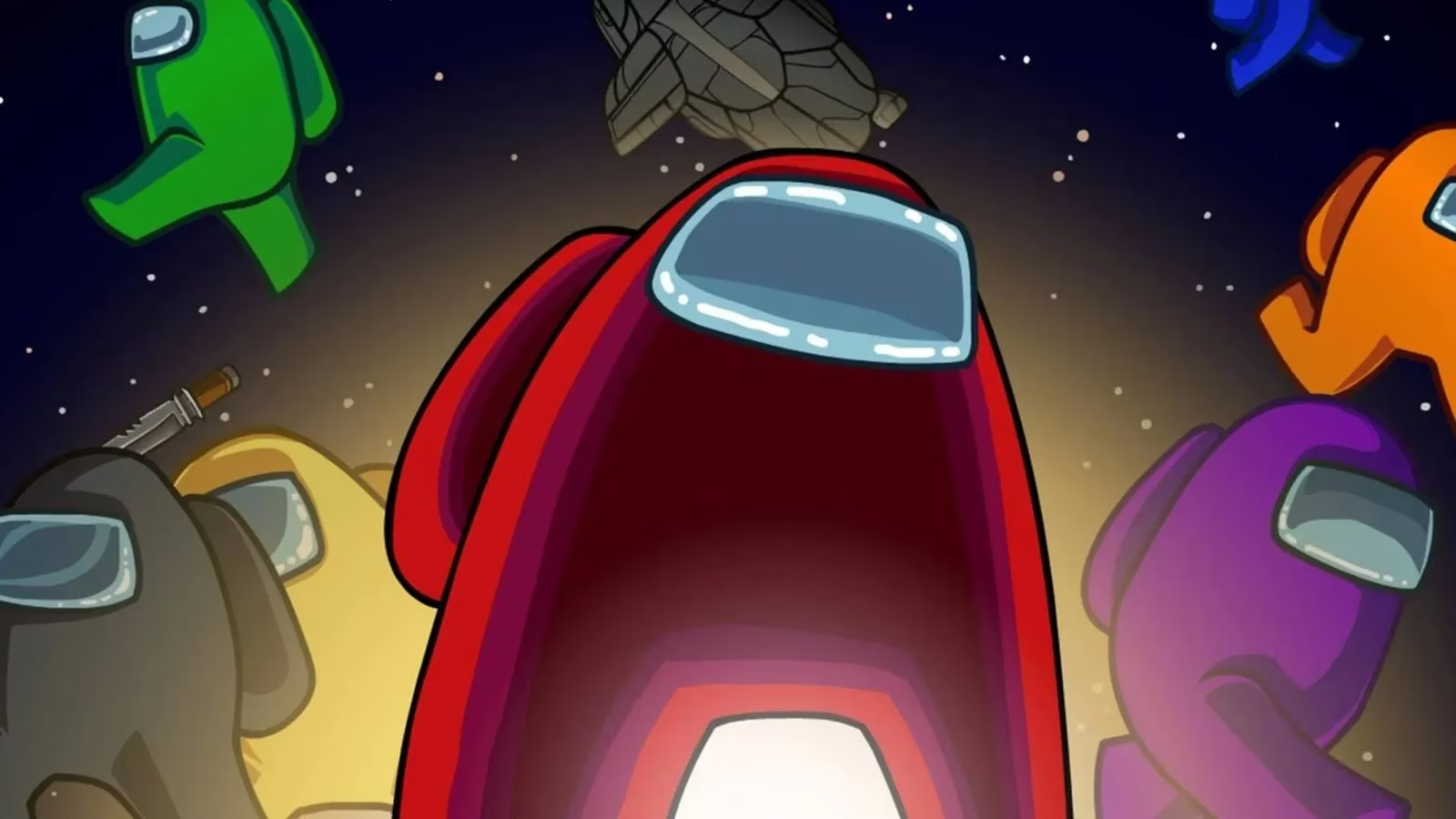
It was a Saturday afternoon in March 2026, and I had one single ambition: nap. But instead of drifting off into a peaceful slumber, I found myself refreshing Twitter obsessively, staring at the words "servers down" in the Among Us official account bio. My imposter syndrome was real, but this time it wasn't about my gaming skills—it was about the entire game vanishing into thin air. How could a game with millions of players worldwide just… stop? Well, as I quickly discovered, someone decided to press the biggest emergency button of them all: a DDoS attack.
Let me rewind a few hours. I logged in, ready to sus out some crewmates, only to be met with the dreaded spinning connection icon. At first, I blamed my own internet. Rebooted the router. Switched from Wi-Fi to Ethernet. Even tried tethering through my phone like some kind of network Frankenstein. Nothing. That’s when I headed to the Among Us subreddit and saw the chaos unfolding. Players from North America and Europe were screaming into the void. Then came the tweet from Innersloth themselves: “we have a sabotage going on lol”. Sabotage indeed—but this wasn’t the cute kind where you turn off the lights or break the reactor. This was a full-blown distributed denial-of-service assault, a malicious flood of junk data designed to overwhelm the servers and boot legitimate players like me right out of the airlock.
For those unfamiliar with the technical side, a DDoS attack is like sending a million fake pizza deliveries to a single address. The real resident can’t get out, the delivery drivers can’t get in, and everyone just gives up. In the case of Among Us, the attacker targeted both the North American and European server racks simultaneously. It was sudden, brutal, and timed with almost comedic cruelty. The official account tweeted: “someone really had to DDoS us at the end of my work day??? Smh???? it's 5pm i wanted to nap this is so rude”. I felt that in my soul. Who hasn't wanted to nap at 5 PM? Who gatekeeps a nap? The audacity.
But here’s the twist I never expected: Innersloth turned the whole disaster into a masterclass in community management. While their servers were being pummeled, they kept tweeting. They made jokes, they complained about croissant shortages, they embraced the chaos. One fan replied, “Among us the only professional company to get hacked and then go 'lol we've been sabotaged',” to which the devs shot back with a life mantra: “reject professionalism embrace giving up”. And you know what? It worked. In a gaming landscape where companies often issue sterile, cookie-cutter apologies, this raw, meme-infused authenticity was like a soothing balm on a fresh wound. We weren’t just a player base; we were fellow crewmates weathering an emergency meeting.
I spent that entire Saturday in a bizarre limbo. I’d refresh Twitter, see a gag about being “undercroissanted,” laugh, then try to launch the game again. Still offline. Rinse and repeat. At one point, the developers said they’d been working all day and that some servers were stabilizing, but they were holding off on an official all-clear. The suspense was immense. Would we get back online before Monday? What kind of twisted mind decides to attack a social deduction game that literally features a sabotage mechanic? It was like a meta version of the game itself: someone, somewhere, was the ultimate imposter, and the real developers were scrambling to complete their tasks.
This entire episode made me reflect on how fragile our favorite online worlds can be. Among Us had already weathered a surprising resurgence in the early 2020s, and by 2026 it had cemented itself as a cozy staple. Yet a handful of malicious individuals could bring it all down with a few keystrokes. Is this the new normal for online gaming? Are we destined to lose entire weekends because someone wants to test a botnet? I don't pretend to have the answers, but I do know that the human element—the devs' hilarious tweets, the fan solidarity, the collective groaning—turned a potential PR nightmare into a story we'll laugh about in the space-themed lobbies for years to come.
By Sunday evening, the servers finally staggered back to life. I joined a game with a bunch of strangers who’d clearly been through the same withdrawal. The chat was filled with jokes about DDoS-proofing the Skeld and banning the word “packets” from the ship. For a brief moment, we weren't just a random lobby; we were survivors. The first imposter round began, and someone immediately self-reported, blaming “lag from the attack.” We all voted them out. It was glorious.
Reflecting now, months later, I find myself asking: did that DDoS attack actually strengthen the Among Us community? After all, nothing bonds people like a shared enemy. Innersloth’s approach—mixing technical transparency with pure levity—should be a case study in how to handle a live-service crisis. They didn't pretend the problem wasn’t happening; they just added a laugh track. And let’s be real, the phrase “reject professionalism embrace giving up” has become my personal mantra whenever my own life feels like a sabotaged reactor.
So next time you’re happily scanning your boarding pass, and suddenly the loading screen freezes, remember that somewhere out there, a groggy developer is probably cursing an attacker while longing for a croissant. And if you're ever the victim of such an outage, take a page from Innersloth’s playbook: panic a little, laugh a lot, and never underestimate the power of a well-timed nap.
The aftermath of the great DDoS: confusion, betrayal, and an urgent need for snacks.
In the end, the biggest twist wasn’t the attack itself—it was the realization that even in the face of digital sabotage, a community that laughs together stays together. And honestly? That’s more satisfying than any victory screen.
Data referenced from Eurogamer helps frame why outages like the Among Us DDoS hit harder than a typical bug: for always-online titles, server availability is effectively part of the “gameplay,” and real-time developer communication can meaningfully shape how players perceive an incident. In a situation where matchmaking collapses and communities spiral into rumor, timely updates and a clear explanation of the disruption can turn frustration into solidarity—much like Innersloth’s meme-heavy transparency did during the sabotage.