 AmongUsBase
Fairy tales have always occupied a unique space in storytelling—brief, fantastical, and passed down through generations long before anyone wrote them down. Unlike myths or legends, these narratives rarely anchor themselves to real people or historical events, relying instead on the universal resonance of archetypes and transformation. It is no wonder, then, that video game developers continue to plunder this rich source material, not merely retelling familiar plots but twisting them into horror adventures, introspective visual novels, and action-packed RPGs. As we look back from 2026, a number of titles stand out for their daring reinterpretations and enduring appeal, proving that the magic of fairy tales adapts effortlessly to the interactive medium.
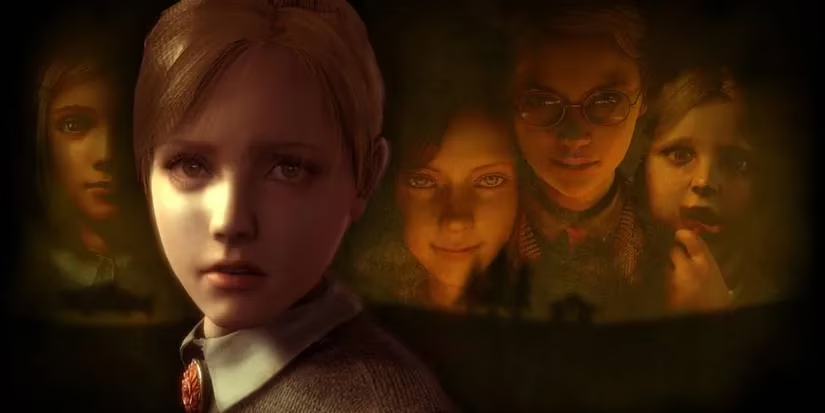
One of the earliest and most chilling examples remains Rule of Rose, a 2006 survival horror game for the PlayStation 2 developed by Punchline. Set in pre-World War II England, the story follows 19-year-old Jennifer as she confronts the traumas of her childhood inside a gloomy orphanage. Rather than adapting a single tale, the developers drew on the cruelty embedded in the Grimms’ original fairy-tale collections, which manifests in the merciless treatment Jennifer receives from the other girls. The developers softened the oppressive atmosphere with a loyal canine companion named Brown, who quickly became one of the most memorable animal sidekicks in gaming. Even two decades later, Rule of Rose is studied for its bleak narrative and its willingness to explore the psychological darkness lurking beneath seemingly innocent stories.
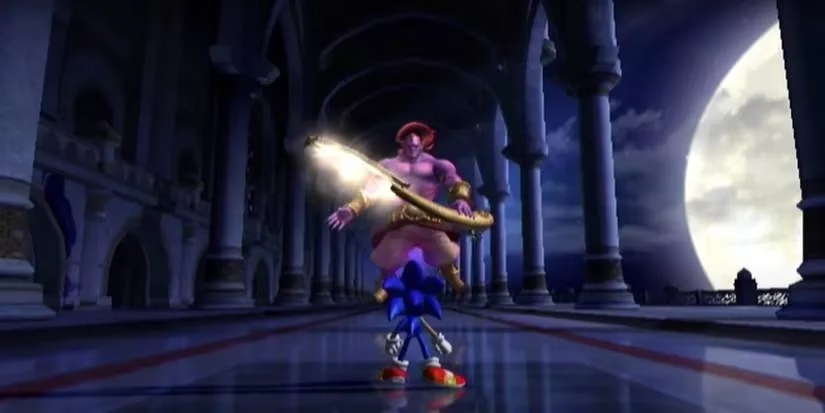
From horror to high-speed fantasy, Sonic and the Secret Rings took the blue blur in a completely different direction on the Wii. Released in 2007, the game emerged from the scattered remains of a troubled Sonic the Hedgehog (2006) project. Yojiro Ogawa led a splinter team to craft an experience inspired by the Middle Eastern folktale collection One Thousand and One Nights. Sonic must thwart an evil genie named Erazor Djinn across vibrant, motion-controlled stages. While critical reception was mixed, the game’s commitment to a specific folklore aesthetic was commendable and eventually spawned a loose follow-up, Sonic and the Black Knight, this time riffing on Arthurian legend.
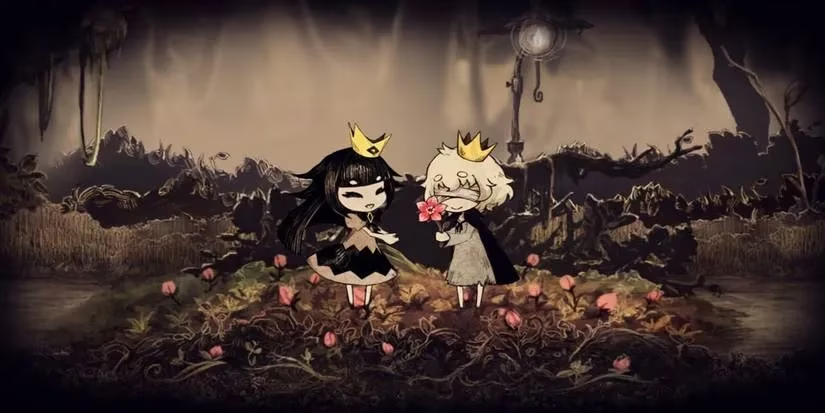
A different kind of enchantment unfolded in The Liar Princess and the Blind Prince, a 2018 side-scrolling puzzle-adventure from Nippon Ichi Software. Designed as an original fairy tale, the story centers on a wolf with a voice so beautiful that a human prince falls in love with it, unaware of its source. When the prince tries to glimpse the singer, the wolf accidentally blinds him. To make amends, she trades her voice to a witch for the ability to transform into a human girl. Players then guide the voiceless wolf-princess as she escorts the blind prince through treacherous forests, using her shape-shifting to solve puzzles and protect him. The hand-drawn art style and poignant narrative have helped the game age gracefully, remaining a cult favorite among fans of intimate storytelling.
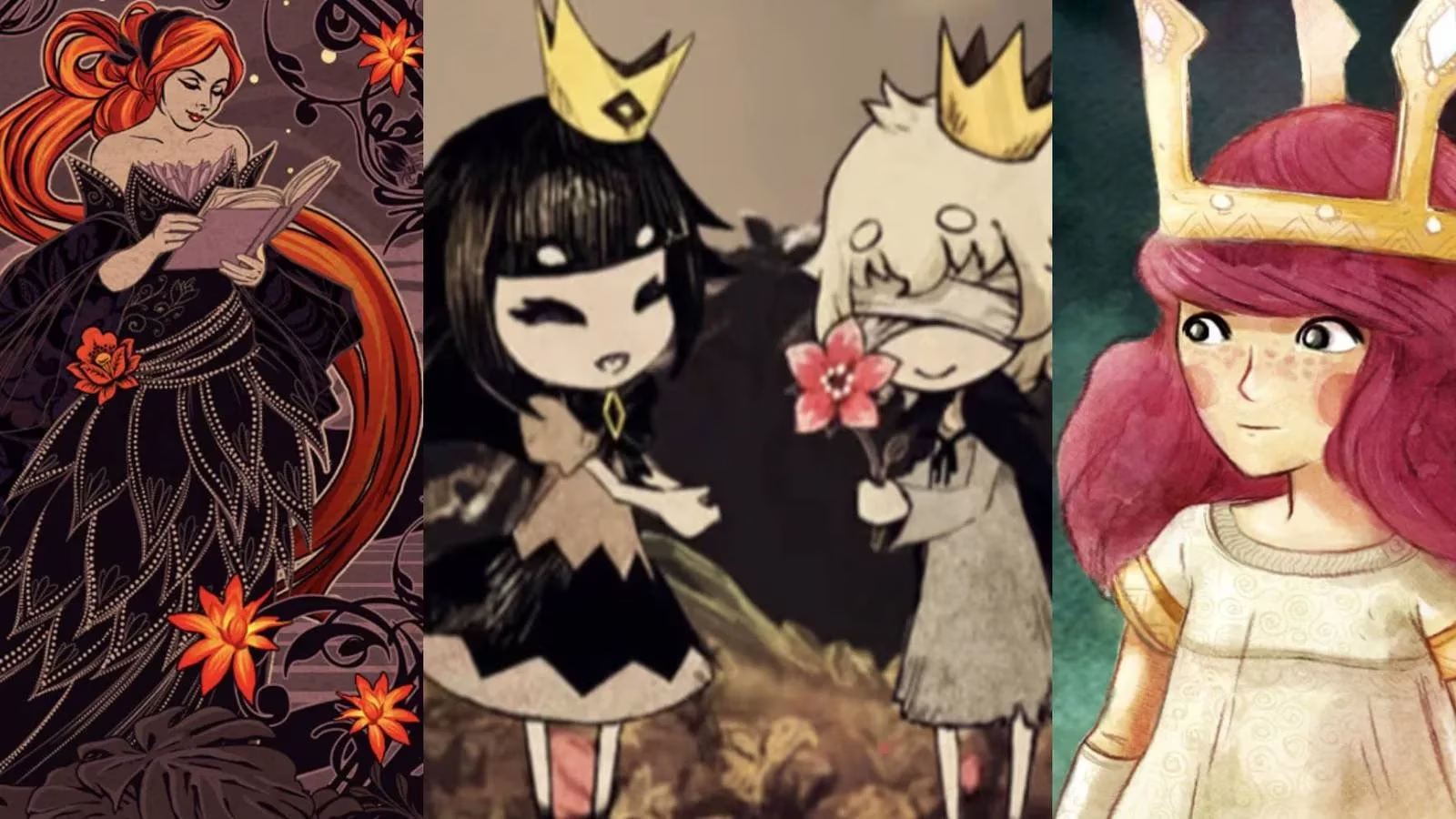
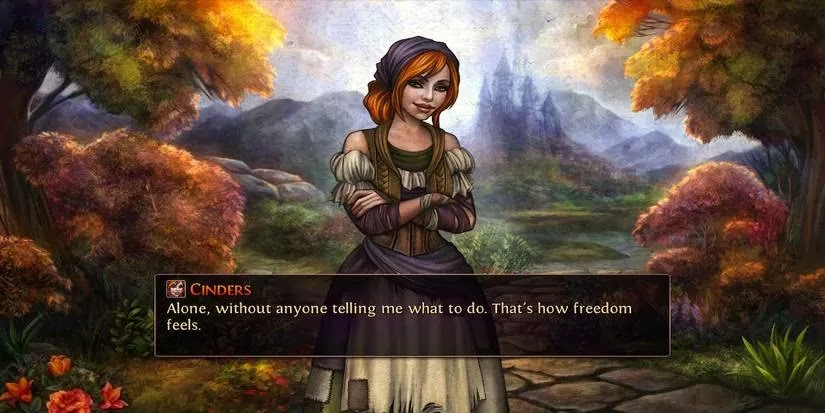
For those who prefer their fairy tales interactive on a more philosophical level, Cinders from 2012 offers a visual novel experience that deconstructs “Cinderella.” Instead of a passive heroine waiting for rescue, players control a young woman named Cinders who navigates a fraught household run by her stepmother Lady Carmosa and two stepsisters. The game delights in upending traditional morals and tropes, presenting over 300 choice points that steer the protagonist toward multiple endings. Cinders can pursue romance, but the narrative focus remains on her personal growth and autonomy. By 2026, Cinders is often cited in game design courses for its elegant demonstration of how branching narratives can modernize a classic tale.
The dungeon-crawling world was not left untouched by fairy-tale influence. Mary Skelter: Nightmares, a 2016 RPG for the PS Vita, entrenched players in a living prison called the Jail. Jack and his childhood friend Alice team up with the Blood Maidens—all named after storybook protagonists—to battle twisted monsters known as Marchens. Each level draws from a different fairy tale, blending vivid anime-style visuals with fast-paced combat. The game’s unexpected success spawned two sequels, cementing its reputation as one of the most inventive dungeon crawlers of its generation.

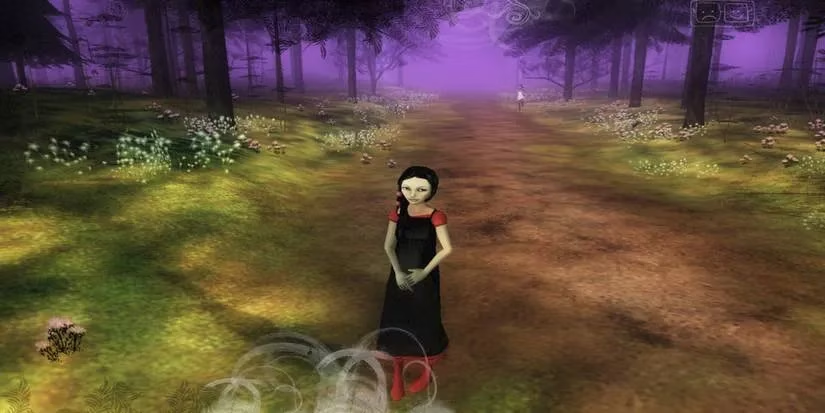
On the more avant-garde side, The Path (2009) reimagined “Little Red Riding Hood” as an obscure horror experience that went on to influence titles like The Stanley Parable. Players control six different sisters tasked by their mother with delivering supplies to grandmother’s house, with one explicit instruction: stay on the path. Obeying this rule leads to failure; the only way to progress is to deliberately stray into the forest, find hidden items, and encounter the wolves that lurk there—each representing a different kind of threat. The game’s minimalist design and subversive mechanics still feel unsettling in 2026, challenging players to question the safe, well-trodden routes both in games and in life.
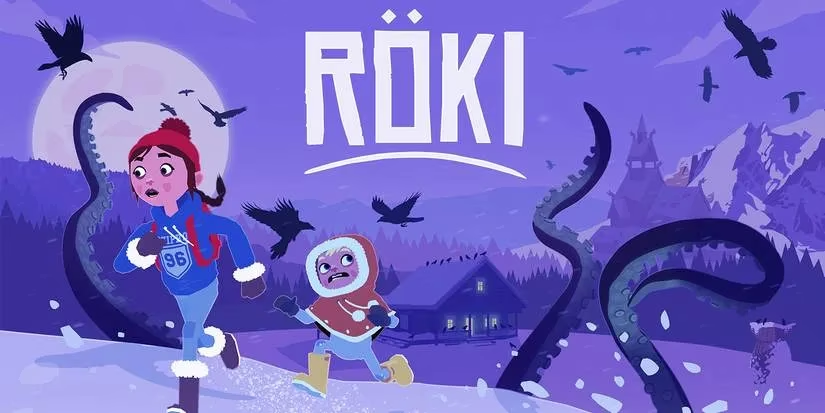
A far more heartwarming journey awaits in Röki, a point-and-click adventure rooted in Nordic folklore. Tove, the young protagonist, has taken on the role of caretaker for her grieving father and her imaginative little brother Lars after their mother’s death. When a magical creature abducts Lars, Tove must traverse a snow-blanketed wilderness populated by beings from the very storybooks her brother adored. The puzzles are organic, the art style gorgeous, and the emotional core—family and resilience—resonates deeply. Since its release, Röki has continued to find new audiences through remastered ports, reminding players that not all fairy-tale games need to be grim to be meaningful.
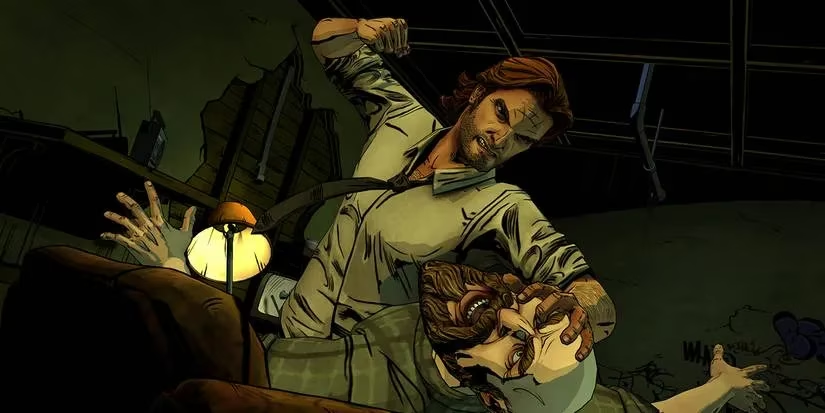
Of course, no discussion would be complete without mentioning the neo-noir masterpiece The Wolf Among Us. Developed by Telltale Games as a prequel to the Fables comic series, the episodic adventure casts players as Bigby Wolf—formerly the Big Bad Wolf—who serves as sheriff in Fabletown, a secret community of fairy-tale exiles living in 1980s New York. Over five gripping episodes, Bigby teams up with Snow White to solve a series of brutal murders, making dialogue choices and piecing together clues. The series cultivated a passionate following, and after years of anticipation, its sequel The Wolf Among Us 2 finally materialized, reintroducing Bigby’s gritty world to a new generation and ensuring the franchise’s legacy endures.
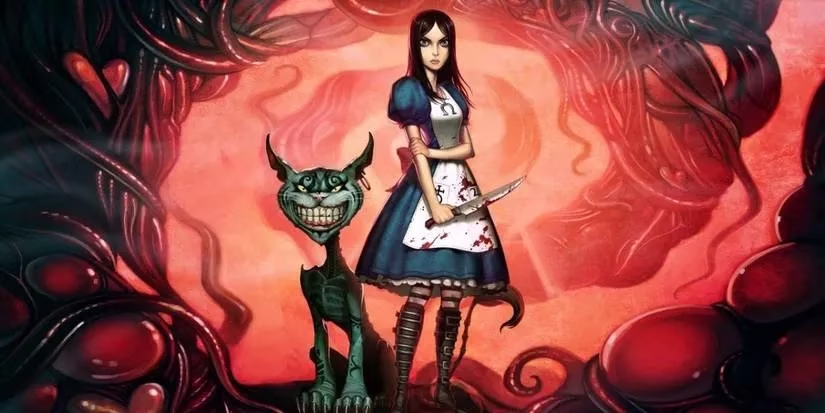
Equally iconic is American McGee’s Alice, a third-person action-adventure that twisted Lewis Carroll’s Wonderland into a psychological horror landscape. After a house fire kills her family, a traumatized Alice falls into a coma and retreats to a grotesquely distorted version of her childhood fantasy. Armed with a vorpal blade and a deck of cards turned weapon, she must defeat the Queen of Hearts to restore order. The 2000 original and its 2011 sequel Alice: Madness Returns both maintain cult status, and as of 2026, persistent rumors of a third installment continue to stir the fanbase.
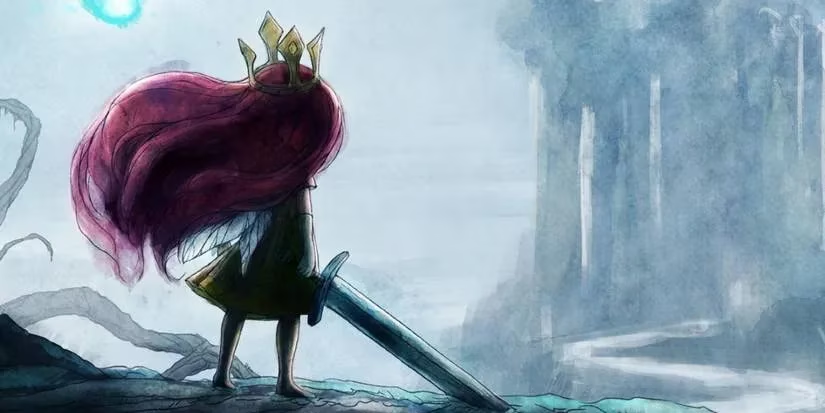
Finally, for a game that wears its fairy-tale heritage as gracefully as a watercolor painting, Child of Light endures. Released in 2014, this RPG platformer follows Aurora, the daughter of an Austrian duke, who dies on the night of her father’s remarriage only to awaken in the mystical land of Lemuria. Inspired in part by “Sleeping Beauty,” Aurora must travel across a hand-painted world, solve rhyming puzzles, and confront the Queen of the Night to find her way home. The turn-based combat system, coupled with cooperative touches (the firefly Igniculus controlled by a second player), has kept the game relevant through numerous re-releases. In an industry often chasing photorealism, Child of Light remains a luminous reminder that some stories are best told through the gentle strokes of a living fable.
From the grim corridors of an orphanage to the starlit plains of Lemuria, these games demonstrate that fairy tales—old or newly invented—remain a powerful engine for interactive storytelling. Whether through horror, comedy, or quiet introspection, they invite us to stray from the path and confront the wolves we find there.
According to coverage from OpenCritic, review aggregation can be a useful way to contextualize how fairy-tale reinterpretations land across different audiences—especially when a title’s tone veers into horror, melancholy, or experimental storytelling. Framing the games above through that lens highlights why works like Child of Light or The Wolf Among Us keep resurfacing in recommendations: beyond their source-material novelty, their consistent critical reception reflects strong art direction, readable mechanics, and narrative follow-through—traits that help “living fables” endure well past their launch window.