 AmongUsBase
The digital universe spins with ceaseless fervor—a churn of code and color where each month births new legends. Yet beneath the dazzling surface of triple-A launches and fleeting battle passes, the tides of player attention reveal a deeper, stiller current. A gaze back at the NPD’s 2022 portrait of the most-played games mirrors an eternal truth: the pillars of play do not crumble so easily. In the first quarter of that year, a pantheon of titles stood unshaken, and even as 2026 unfolds, their glow has scarcely dimmed.
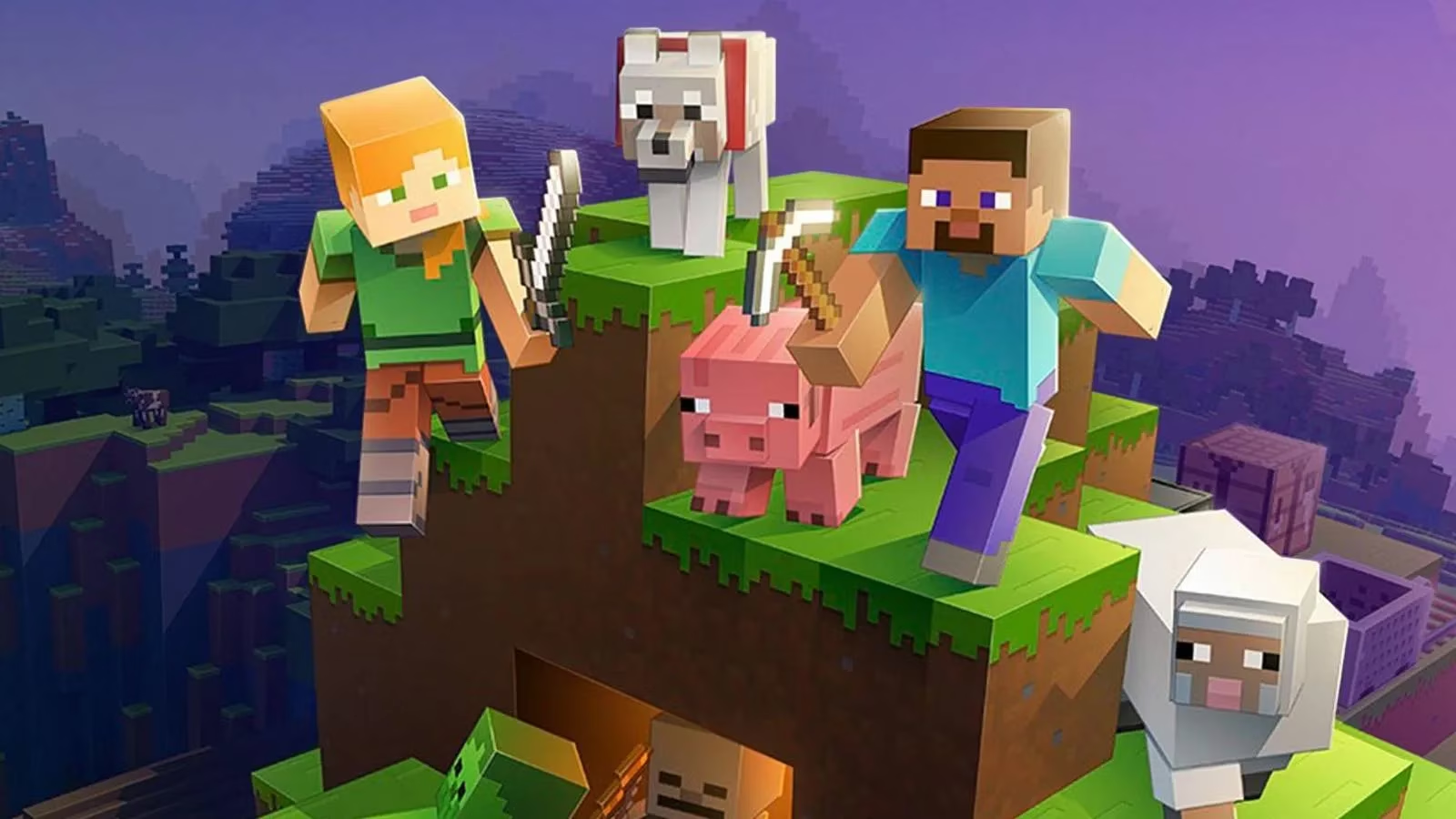
In a landscape forever trembling with novelties, half of the top ten most-played games from that era had not been born in the preceding few years. The silent monarch among them, Minecraft, first carved its cubic sunrises in 2009, standing as the sole elder across the decade mark. Its endurance is no accident. Through a symphony of routine updates, its blocky meadows and caverns have remained a canvas for infinite creativity. The game thrives not merely on nostalgia but on the ever-regenerating hum of community—generations building, exploring, and sharing in a loop that refuses to fade. It is a testament to longevity powered by simplicity and the boundless combinatorics of player imagination.
Sharing this timeless throne were companions whose journeys also began before 2020. Among Us, a sleeper hit that erupted like a supernova in social gaming, taught the world the sharp thrill of betrayal in pastel corridors. Fortnite, the cultural gravity well, continued to shift its reality with live events and cross-dimensional crossovers. The Sims 4 offered a dollhouse of digital existence where storytelling never ends, while Grand Theft Auto V sustained its criminal saga across three console generations. Though hailing from different genres, these four titles were woven together by a golden thread: the viral radiance of streaming services like Twitch, YouTube, and Facebook Gaming. Their moments of drama, humor, and spectacle became communal campfires, burning far beyond the games themselves.
The remaining names that filled the Q1 2022 leaderboard belonged to annual dynasties—NBA 2K22, Call of Duty: Vanguard, Madden NFL 22, and the free-to-warzone sensation, Call of Duty: Warzone. Amid these sports simulators and military shooters perched a peculiar rose: Animal Crossing: New Horizons. Released in the velvet shadow of a global pandemic, its gentle island life became a digital refuge for millions, and even two years beyond, its calming orchestration of fishing and friendship refused to be forgotten. Together, these recent and recurrent flagships illustrated that the peak of playtime is reserved for franchises that have become seasonal rituals or living platforms.
From the vantage point of 2026, the lesson endures. New contenders arrive cloaked in critical glory. Elden Ring, the sprawling dark masterpiece of early 2022, sold a staggering 13.4 million copies and reshaped open-world design. Yet when measured by the steady clock of playtime, it only reached the twentieth rung—nestled behind perennially potent service games like Rocket League and World of Warcraft, and even the ageless Skyrim. Success, as it turns out, hums on many frequencies; commercial triumph and daily habit inhabit different continents. The top ten remains an exclusive club, its gates so narrow that even a blockbuster that defines a generation may only press a fingerprint against the glass.
This enduring pattern—where the old giants refuse to yield the stage—speaks to a deeper architecture of modern gaming. Live service titles, with their constellations of daily quests, seasonal battle passes, and social ecosystems, have built flywheels that momentum alone keeps spinning. They are not just games; they are destinations, third places where friendships bloom and rivalries simmer under a persistent sky. Meanwhile, the streamer phenomenon lubricates the gears of longevity, converting singular moments into viral pulses that draw new wanderers back to the same shores.
Looking ahead from 2026, the most-played horizon remains colored by these same hues. Though fresh names flicker—some fade, some crystallize—the bedrock rarely shifts without a tectonic event. A new Minecraft mod might spawn a viral subculture, a surprise update could make a decade-old title surge, but the gravitational pull of established worlds is immense. The industry’s heartbeat is a paradox: ever-searching for the next revolution, yet grounded in the familiar temples built by enduring code. Gamers, like poets, often return to the landscapes where their imagination first learned to dance, and as long as those worlds keep their lanterns lit, the throne shall be shared by the old and the beloved.