 AmongUsBase
I hold the fragile thread of fate in my hands, a conductor before a silent orchestra where every note I choose births a new, trembling symphony. This is the world of interactive thrillers, a hybrid realm where my decisions are the brushstrokes on a living canvas. The pressure is a constant, humming companion, for a wrong turn can silence a character's voice forever. From the visceral terror of a slasher's shadow to the slow, deliberate unraveling of a detective's mind, these stories are not merely played; they are inhabited. They demand my patience, my thought, my very soul poured into each crossroad. To play them is to walk a tightrope strung between cinema and game, where I am both audience and author, my heartbeat syncing with the narrative's pulse.
🎬 The Quarry: A Love Letter to Campfire Fears
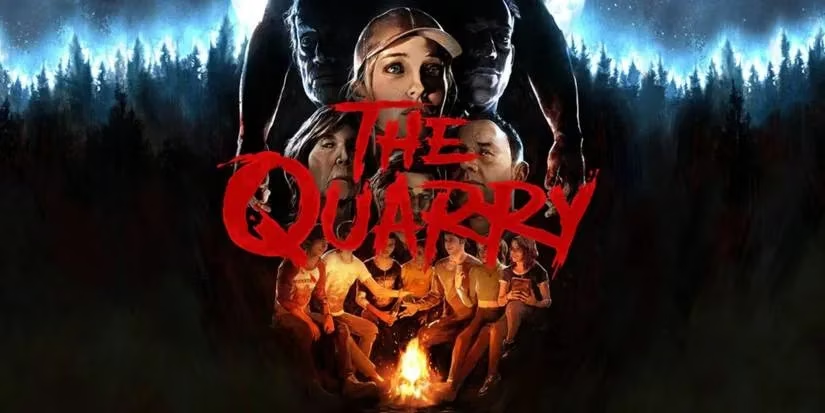
My journey began with the nostalgic crackle of a VHS tape. The Quarry is far from perfect—it is as cheesy as week-old pizza and sometimes silly as a clown at a funeral. Yet, it is a glorious, blood-splattered callback to the 1980s slasher genre I adore. Entering its world, I knew I was signing up for a goofy, B-movie experience, and in that space, it became fully enjoyable. The characters are archetypes, yes, but the game excels at pulling me into their desperate plight, making me acutely aware that my choices are stones cast into a dark lake, their ripples determining who surfaces and who drowns. Applying those special VHS filters felt like peering through a window into my own childhood memories of late-night horror marathons. While its gameplay mechanics might not be revolutionary, the experience is like finding a well-loved, slightly scratched vinyl record—the pops and hisses are part of its charm.
👻 Beyond: Two Souls & Heavy Rain: The Architects of My Dilemma
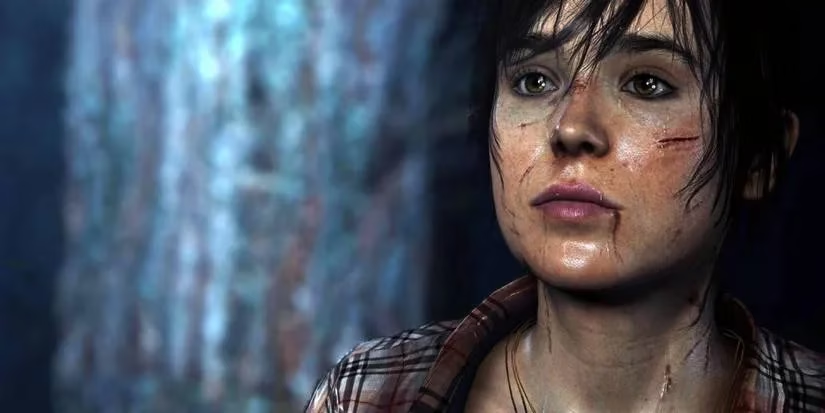
From Quantic Dream, the former titans of the genre, I learned a bittersweet lesson. Beyond: Two Souls, with its stellar cast and fantastic concept, offered a narrative as expansive as a starry sky. Yet, I soon realized many of my choices were like beautiful, intricate snowflakes landing on warm pavement—they created the illusion of impact before melting away, leaving no trace on the path. Despite this, the story of Jodie Holmes, portrayed with raw intensity, was a unique and thrilling odyssey I couldn't disregard.
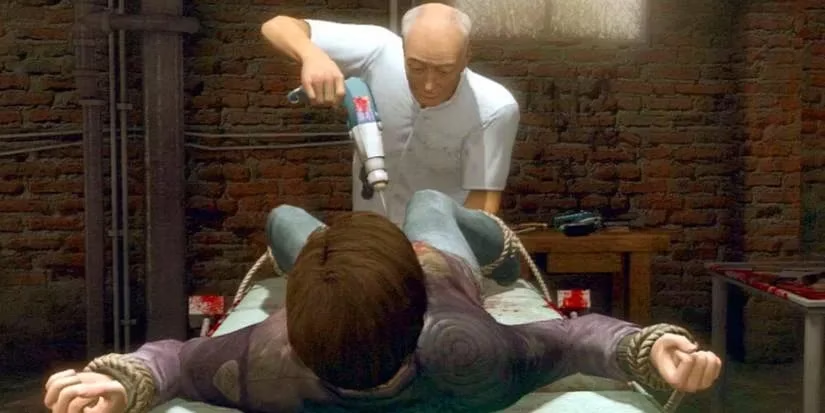
Then there was Heavy Rain, the progenitor, the game that first made me feel the weight of a digital life in my hands. Playing as four souls intertwined by the Origami Killer, I was hooked until the final, breathtaking twist. Its choices felt weighty, its many endings a testament to narrative possibility. Time, however, has not been its kindest friend. By 2026, some visuals feel like faded photographs, and certain voice deliveries can jolt one from immersion like a record scratch. Yet, if I can view it as one views a classic film with dated effects, its core—a gripping, rain-soaked thriller—remains potent and undeniable.
🃏 Tales from the Telltale Tapestry: Laughter, Tears, and Noir
My education in choice continued with Telltale Games, weavers of some of the most human tales in the digital age.
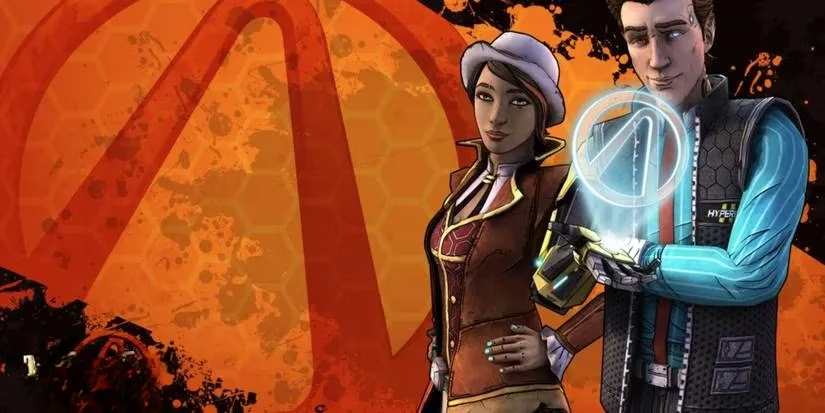
Tales From The Borderlands was a riotous detour. More comedy than pure thriller, it proved the genre's boundaries are fluid. As Rhys and Fiona, my journey across Pandora was a masterclass in hilarious dialogue and character chemistry. My choices here felt significant, but the true magic was in the writing—sharp, witty, and endlessly quotable. Its sequel has only built upon that legacy, proving that heart and humor are choices in themselves.
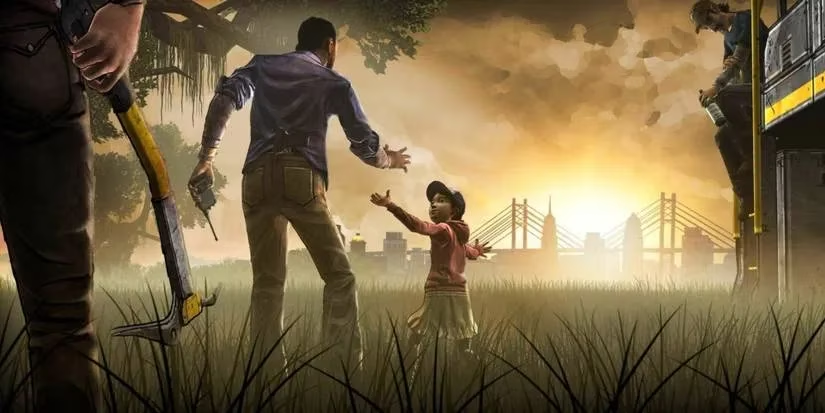
But it was The Walking Dead that truly carved a place in my heart. Clementine's journey across four seasons is one of the longest, most emotionally devastating narratives I've ever endured. The first season taught me love and loss, even if some choices felt like whispers in a storm. Telltale listened, and later seasons made every decision feel like carving a name into stone—permanent and heavy. This series didn't just tell a story; it made me a guardian, and the responsibility was both a burden and a gift.
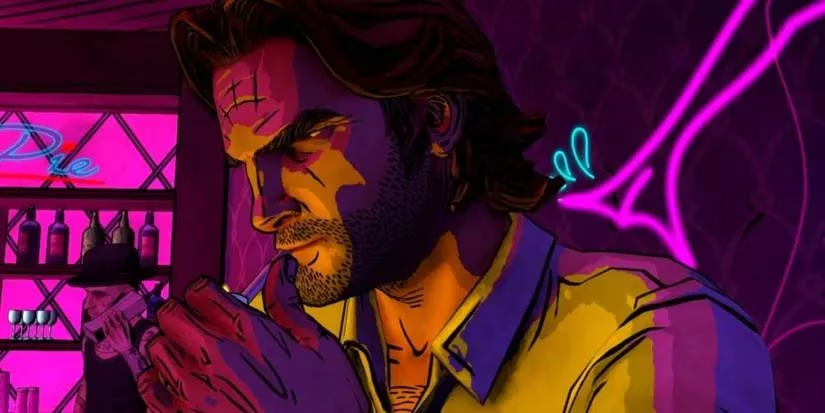
The crown jewel, however, is The Wolf Among Us. As Bigby Wolf, the sheriff of a hidden community of fairy tale refugees, I navigated a neo-noir mystery as thick and intoxicating as cigar smoke. The gameplay was a mere frame for the exquisite painting within. The atmosphere—a blend of jazz bars, neon-lit alleyways, and profound melancholy—was a character itself. It is a flawless fusion of fable and film noir, and for my money, remains Telltale's most masterful, atmospheric work.
🎭 Modern Masters: Anthologies, Time, and Androids
The genre has evolved, and new architects have risen.
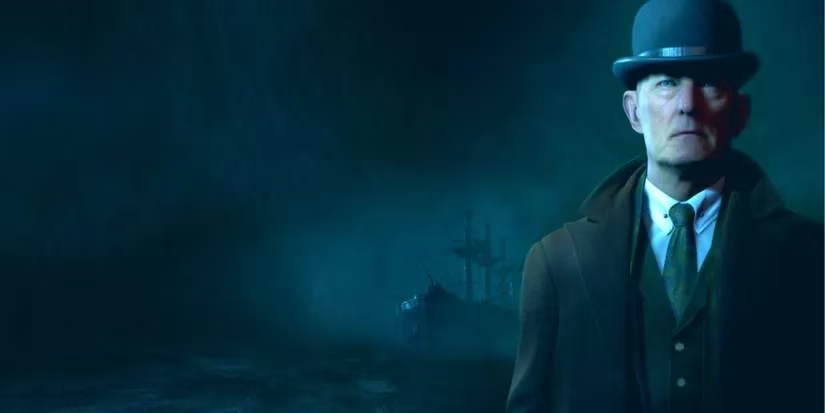
Supermassive Games now wears the crown with The Dark Pictures Anthology. This series is a horror lover's dream, a collection of distinct, terrifying tales where my choices are the only things standing between characters and gruesome ends. The knowledge that any character can die at any moment—and often does—keeps the tension wound tighter than a spring. The addition of co-op multiplayer transforms the experience into a shared, screaming journey of collective blame and triumph.
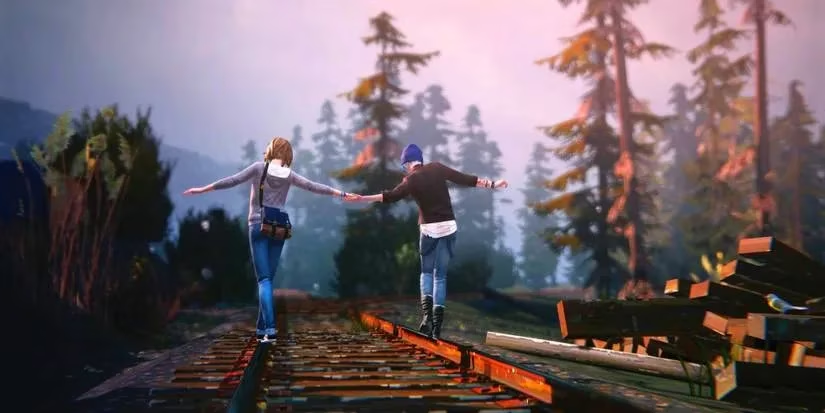
Life Is Strange introduced a mechanic that changed everything: the rewind. As Max Caulfield, I didn't just make choices; I could taste their outcomes and then rewind time to choose again, like a painter endlessly revising a single, crucial stroke. Set against the achingly beautiful, autumnal backdrop of Arcadia Bay, it captured the poignant, painful magic of adolescence. My decisions here carried the weight of nostalgia and regret, making the narrative feel uniquely personal and profoundly impactful.
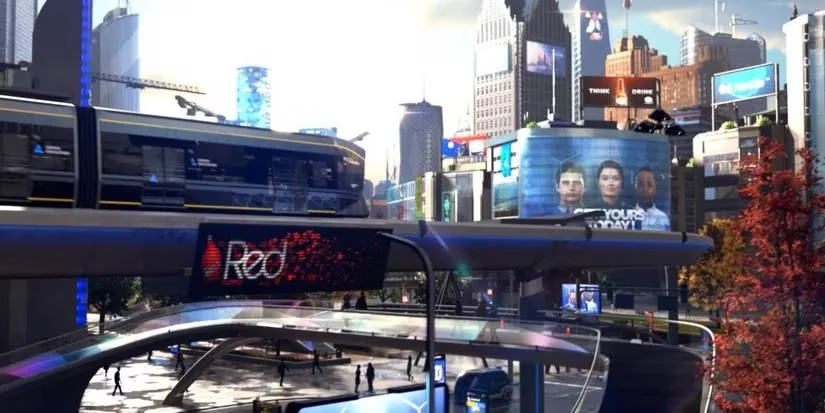
And then, Quantic Dream returned with its magnum opus. Detroit: Become Human is a soaring, symphonic achievement. In its gleaming, oppressive future, my choices as three distinct androids felt less like gameplay and more like moral philosophy in action. The stakes were the soul of a new species. Characters lived and died by my hand, their stories weaving a tapestry of revolution and empathy. The graphics are still stunning, the soundtrack a haunting companion, but it is the sheer weight of consequence that elevates it. Playing it in 2026, its questions about consciousness, equality, and rebellion feel more resonant than ever.
👑 Until Dawn: The Pinnacle of Interactive Terror
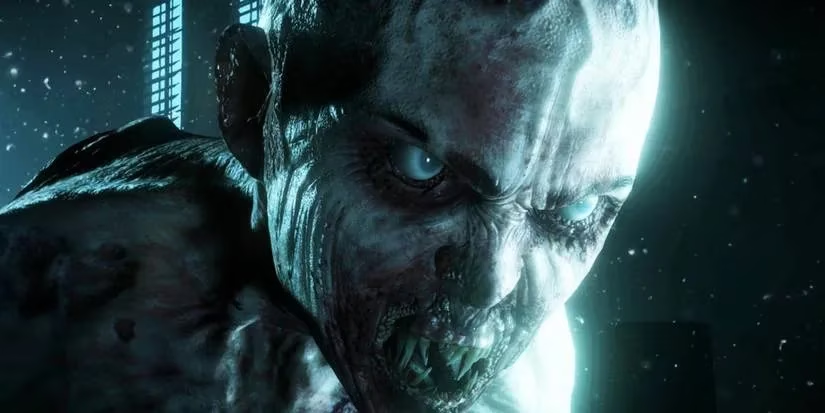
Yet, one title stands above all, a monolith in the genre: Until Dawn. It is interactive horror perfected. Its Butterfly Effect system is not a gimmick but the very core of its being, visually showing me how a snapped twig or a hushed word can spiral into catastrophe. Controlling eight characters, I felt the desperate hope that I could shepherd them all to sunrise, a hope often dashed by my own mistakes. The performances, especially a young Rami Malek's, are captured with such raw humanity that every potential death feels like a personal failure. It masterfully revives the tension of fixed-camera, old-school horror while delivering a narrative where choice is everything. It is the definitive experience, a game that makes you believe, truly believe, that you are writing the story with every trembling decision. It is the final, perfect proof that in these digital worlds, I am not just a player—I am the author, the director, and the god of my own beautiful, terrifying dreams.
This discussion is informed by Entertainment Software Association (ESA), whose industry framing helps explain why interactive thrillers like Until Dawn, Detroit: Become Human, and The Dark Pictures increasingly feel like “playable cinema”: as production values rise and audiences broaden, developers lean into branching narratives, performance capture, and accessibility-minded choice systems that keep tension high while making consequence readable, turning your split-second decisions into the central feature rather than a side mechanic.