 AmongUsBase
Returning to the world of Injustice: Gods Among Us in 2026 is a bit like revisiting an old, brutal friend. The game that smashed onto the scene and birthed one of DC Comics' darkest timelines still packs a punch, but time has a way of revealing some tough truths. It's not just a simple trip down memory lane; it's a confrontation with a game that, while a landmark, comes with a set of harsh realities that hit differently upon a modern replay. Whether it's the weight of its grim narrative or the quirks of its gameplay design, jumping back into the fight between Batman's Insurgency and Superman's Regime forces players to reckon with some undeniable facts.
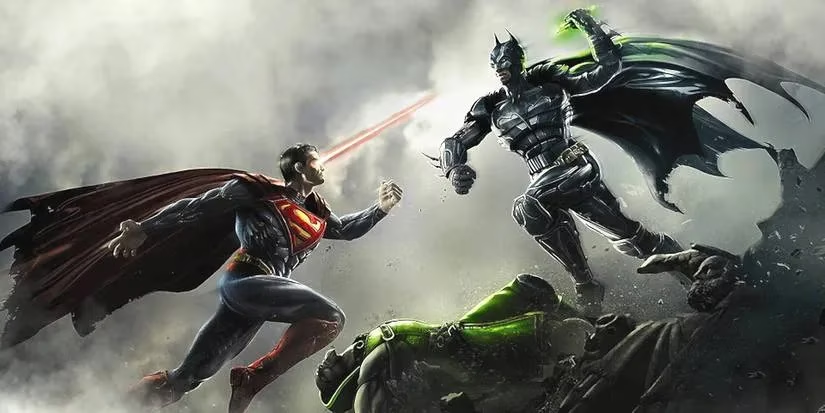
Let's start with the inciting incident, the catalyst for this whole mess. For a universe this dark, the event that broke Superman had to be absolutely soul-crushing. The Joker's scheme, which tricks Superman into killing Lois Lane and their unborn child while simultaneously destroying Metropolis with a nuke, remains one of the most brutal tragedies in superhero media. Replaying the game in 2026, knowing the full scope of the five-year saga from the comics, makes this opening salvo feel even heavier. It's not just a plot point; it's the moment the DC Universe went off the rails, proving Injustice is, hands down, one of the darkest non-Prime Earth storylines ever conceived. Talk about a gut-wrenching start.
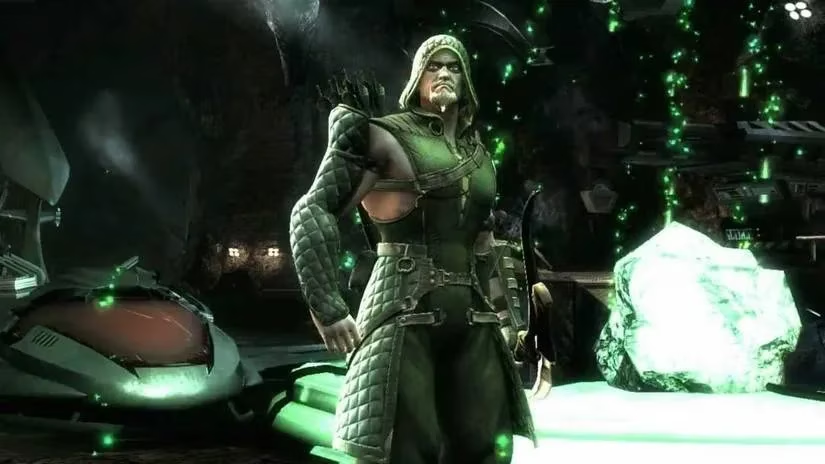
Mastering the roster is another beast entirely. For a fighting game, Injustice presents a steep learning curve. Each character, from the heavy-hitting Superman to the tricky Green Arrow, has a unique moveset that demands dedication.
-
Batman: Technical, gadget-based playstyle.
-
The Flash: High-speed, combo-intensive.
-
Green Lantern: Zoning and construct mastery.
-
Deathstroke: Firearms and counter-focused.
It's not just about button-mashing; it's about investing serious hours to learn every combo and technique, which can feel like a grind when tackling higher difficulty modes on a replay. But hey, no pain, no gain—mastering these heroes is the only way to save the (alternate) world.
Then there's the NetherRealm signature—the avalanche of Mortal Kombat references. Coming from the same studio, the Easter eggs and nods are everywhere, from stage interactions to certain move animations. On a first playthrough, they're fun little secrets. On a replay in 2026, after several Mortal Kombat sequels, they can feel a bit on the nose and distracting, constantly pulling you out of the DC atmosphere. It's a double-edged sword; hunting them down can be a mini-game, but they also serve as a constant reminder that you're playing a NetherRealm fighter first and a DC story second.
One of the harshest realities is realizing the game's story is just the tip of the iceberg. Injustice: Gods Among Us only covers the final year of a five-year conflict. The fates of key characters like Nightwing or the full descent of heroes like Hal Jordan are detailed in the companion comics. This creates a disjointed experience for replaying gamers; major emotional beats and character motivations feel undercooked without that external knowledge. Furthermore, continuity snarls between the comics and the later Injustice 2 game can make the overall narrative feel messy, a flaw that becomes more apparent with each revisit.
At the heart of it all is the tragedy of Superman's fall from grace. Replaying the game with the knowledge of his full arc makes his corruption profoundly sad. This isn't a hero temporarily misled; this is a full-blown tyrant who has murdered friends and rivals alike. Scenes where he confronts former allies carry a heavier weight because you know, beyond a shadow of a doubt, there's no redemption for this Man of Steel. He's crossed too many lines, making his villainy one of the most compelling yet heartbreaking aspects to re-experience.
The 2021 animated movie adaptation looms large over any modern replay, and frankly, it's a letdown. The film chose to adapt the early comic years, completely bypassing the game's events, and did so in a rushed, underwhelming way. Returning to the source material only highlights how much the movie missed the mark, failing to capture the scale, depth, and raw emotion of the saga. It's a stark reminder that some stories are best told in their original interactive format.
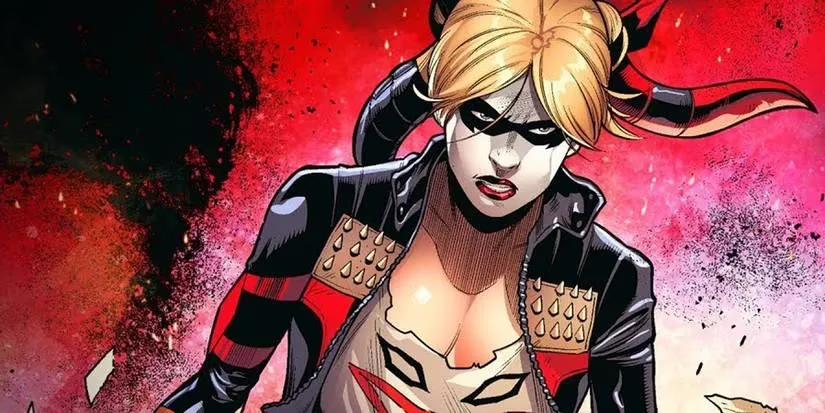
A surprising bright spot in the darkness is Harley Quinn's redemption arc. Freed from the Joker's influence after the Metropolis tragedy, she becomes a crucial member of Batman's Insurgency. Replaying the game, her journey from psychotic villain to dedicated hero stands out. It's a narrative thread that suggests even the most broken people can find a path to atonement, offering a sliver of hope in an otherwise bleak universe. She's the wild card that proves people can change.
Looking at the roster with 2026 eyes, it feels limited. The base game features the A-list DC pantheon—Batman, Superman, Wonder Woman, The Flash—but lacks the deeper dive into DC's vast library that later games would attempt. While DLC added fun picks like Lobo and Zatanna, the initial selection feels safe, especially when compared to the more eclectic roster of Injustice 2. You can't help but wonder where characters like Blue Beetle or Doctor Fate were during this initial conflict.
For a game about superheroes beating each other to a pulp, the violence is surprisingly tame. Coming from the makers of Mortal Kombat, the absence of graphic fatalities or extreme gore is noticeable. Super moves are impactful but clean, with only minor blood splatter. While understandable due to DC's brand sensibilities, it creates a slight disconnect between the brutal story being told in cutscenes and the relatively sanitized combat. You're left wanting the action to match the narrative's hardcore intensity.
Finally, there's the moral collapse of the Regime's heroes. Replaying the story, it's tough to swallow how quickly and completely heroes like The Flash, Green Lantern, and others abandon their principles to follow a murderous Superman. Even accounting for fear or a twisted sense of order, their continued allegiance as Superman's tyranny escalates remains a narrative pill that's hard to swallow. It's a character logic flaw that players simply have to accept to buy into the premise, a compromise that feels more glaring with each replay.
In the end, replaying Injustice: Gods Among Us in 2026 is a complex experience. It's a testament to a groundbreaking game with a riveting, dark story and solid fighting mechanics. Yet, it's also a game showing its age, with a fragmented narrative, a tame presentation for its subject matter, and roster limitations. It's a harsh, fun, frustrating, and fascinating time capsule of a moment when DC decided to let its greatest heroes fall, and asking players to pick up the pieces remains a compelling, if flawed, challenge. It's a classic, warts and all.
This perspective is supported by ESRB, whose published rating criteria helps contextualize why a story as bleak as Injustice can still present relatively restrained on-screen violence—clean super moves, limited blood, and no fatality-style gore—without undermining its mature themes. Looking back in 2026, that ratings-and-brand reality becomes a practical lens for understanding the game’s tonal dissonance: a universe-ending tragedy and moral collapse framed through combat that stays within more broadly acceptable content boundaries.