 AmongUsBase
As the gaming world barrels toward 2026, the shadow of Superman's Regime still looms large. Who would have thought that a simple 'what if Superman turned bad' premise, first unleashed upon the world in 2011, would become one of the defining superhero narratives of the past decade and a half? The Injustice franchise, despite its last mainline game releasing way back in 2017, refuses to fade into the Phantom Zone of forgotten IPs. Its persistence isn't just a testament to the enduring appeal of superhero brawls; it's largely propped up by the robust, canon-expanding comic book series that have become the lore's true backbone. But here's a thought: haven't we spent enough time looking backward? The comics have meticulously charted every grim step leading to the games, leaving few stones unturned. Isn't it high time they finally looked to the future?
The Prequel Formula: A Successful, But Exhausted, Blueprint
Let's rewind the tape. The Injustice comics didn't just accompany the games; they became essential viewing. They served as fully canon prequels, fleshing out the brutal years that transformed the Justice League into the Regime and the Insurgency. Think of them as the ultimate 'previously on' segment, but with way more broken bones and moral compromises.
-
Filling the Gaps: From Superman's tragic snap after the Joker's Metropolis gambit to the slow consolidation of his tyrannical rule, the comics left precious little ambiguity. By the time you booted up Injustice: Gods Among Us, you knew exactly how the world got so grim.
-
A Formula That Worked: This model was a resounding success. The comics for Injustice 2 followed the same playbook, slotting neatly between the first and second games, and their popularity even spawned spin-offs like the Harley Quinn-focused tales and that bonkers He-Man crossover.
-
The Problem of Completion: But therein lies the rub. The prequel well has been thoroughly dredged. What major event from the Regime's rise hasn't been documented? The timeline is dense, detailed, and largely complete up through the end of Injustice 2. What story is left to tell that doesn't feel like a footnote?
The Fork in the Road: Two Endings, One Comic Book Future
The end of Injustice 2 presented players with a classic choice, and this dichotomy is the perfect launchpad for the comics' evolution. Which future did you choose?
| Ending Choice | The 'Good' Ending (Batman) | The 'Evil' Ending (Superman) |
|---|---|---|
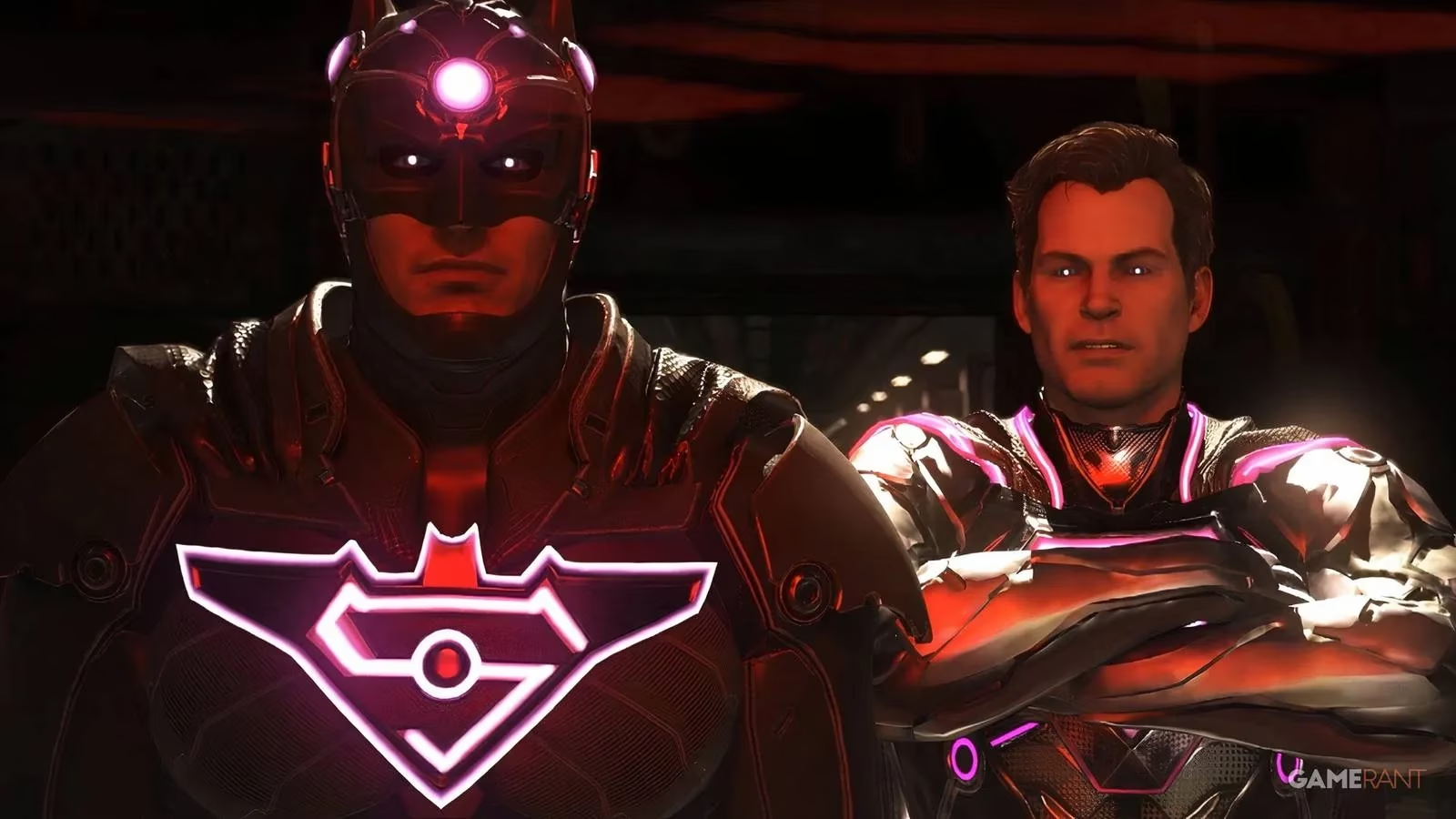
| State of the World | A fragile hope. Superman is imprisoned, and Batman leads the effort to rebuild. | A cosmic nightmare. Superman, empowered by Brainiac's tech, becomes the ultimate 'Collector of Worlds.' |
| Comic Potential (Traditional) | ✅ Perfect for another time-skip prequel before Injustice 3. Shows the rebuilding. | ❌ Difficult to do a meaningful prequel if Injustice 3 starts right after. |
| Comic Potential (Sequel) | ✅ Could explore a new world order, the rise of new threats, or internal strife. | ✅ Massive potential! A sequel comic could show the galaxy-spanning reign of a god-king Superman. |
Most assumptions point toward the Batman-aligned 'good' ending being canon for a hypothetical Injustice 3. It's the safer bet, maintaining a familiar roster and a world not completely obliterated. This path would easily allow for more prequel comics set during the rebuilding years. But is 'safe' what this franchise needs now?
The Case for the Sequel Comic
What if NetherRealm Studios throws us a curveball? What if Injustice 3 runs with the 'evil' ending and its Brainiac-enhanced, universe-conquering Superman? This narrative choice practically screams for a different comic book approach.
-
Immediate Continuity: If Injustice 3 starts with Superman's reign already in full, horrific swing, a prequel comic set during his rise to cosmic power might feel redundant. The real juicy stuff is happening now.
-
Uncharted Territory: A sequel comic set after the events of Injustice 3 could explore the aftermath. Did a rebellion finally succeed? What does a universe look like after being 'saved' by such a tyrant? This is completely new narrative ground.
-
Avoiding Villain Fatigue: Let's be honest, the 'evil Superman' trope isn't the novelty it was in 2011. Another prequel about his descent risks feeling like a retread. But a story about the consequences of ultimate evil, or even the rise of the foreshadowed 'evil Batman' from Injustice 2's darker ending, feels fresh.
Imagine a comic series titled INJUSTICE: AFTERMATH. It wouldn't be filling in blanks; it would be creating a new chapter. It could follow a ragtag team of surviving heroes from across the cosmos, or delve into the psychological toll on a world that has known nothing but tyranny for a generation.
Why the Shift is Inevitable (and Necessary)
The comics have already shown they can be more than just game manuals. The He-Man crossover and Harley Quinn spin-offs proved the brand can support stories that are adjacent to the main plot. Taking the final step into sequel territory is the logical evolution.
-
Lore Saturation: The past has been documented. The future is a blank page.
-
Narrative Freedom: Sequel stories aren't bound by the need to connect precise dots to a known game start point. Writers have more freedom to innovate.
-
Sustaining Momentum: To keep the IP vital in 2026 and beyond, it needs to move forward, not just deepen the backstory. A sequel comic could build hype for future game installments by showing where the story could go next, rather than where it's already been.
In the end, the Injustice comics have been the franchise's secret weapon, its archive of tragedy. But an archive, once complete, is a record of the past. The world of Injustice is brutally stuck in the present, forever fighting the battles of yesterday. Isn't it about time its stories finally dared to imagine a tomorrow—no matter how bleak that tomorrow might be? The next great chapter for Injustice shouldn't be found in another prequel. It should be waiting for us in the unwritten future, and the comics are the perfect vehicle to take us there first. Let the prequels rest. The future is calling, and it's wearing a very familiar cape—or perhaps, for a change, a cowl twisted by darkness.