 AmongUsBase
In the waning months of 2021, when the world was still finding its feet after the global gaming boom of 2020, a small South Korean studio dropped a bombshell on the social deduction scene. Mumo Studio, formed by veterans from the likes of Black Desert Online and Dead to Rights, announced their debut indie title Dubium. It was a sci-fi cocktail blending the trust-and-betrayal loop of Among Us with fully animated 3D characters and a twist that would soon become an ace in the hole: deep Twitch integration. Fast forward to 2026, and Dubium has evolved from a promising Early Access title into a full-blown streaming and esports staple—a journey nobody could have fully mapped out.
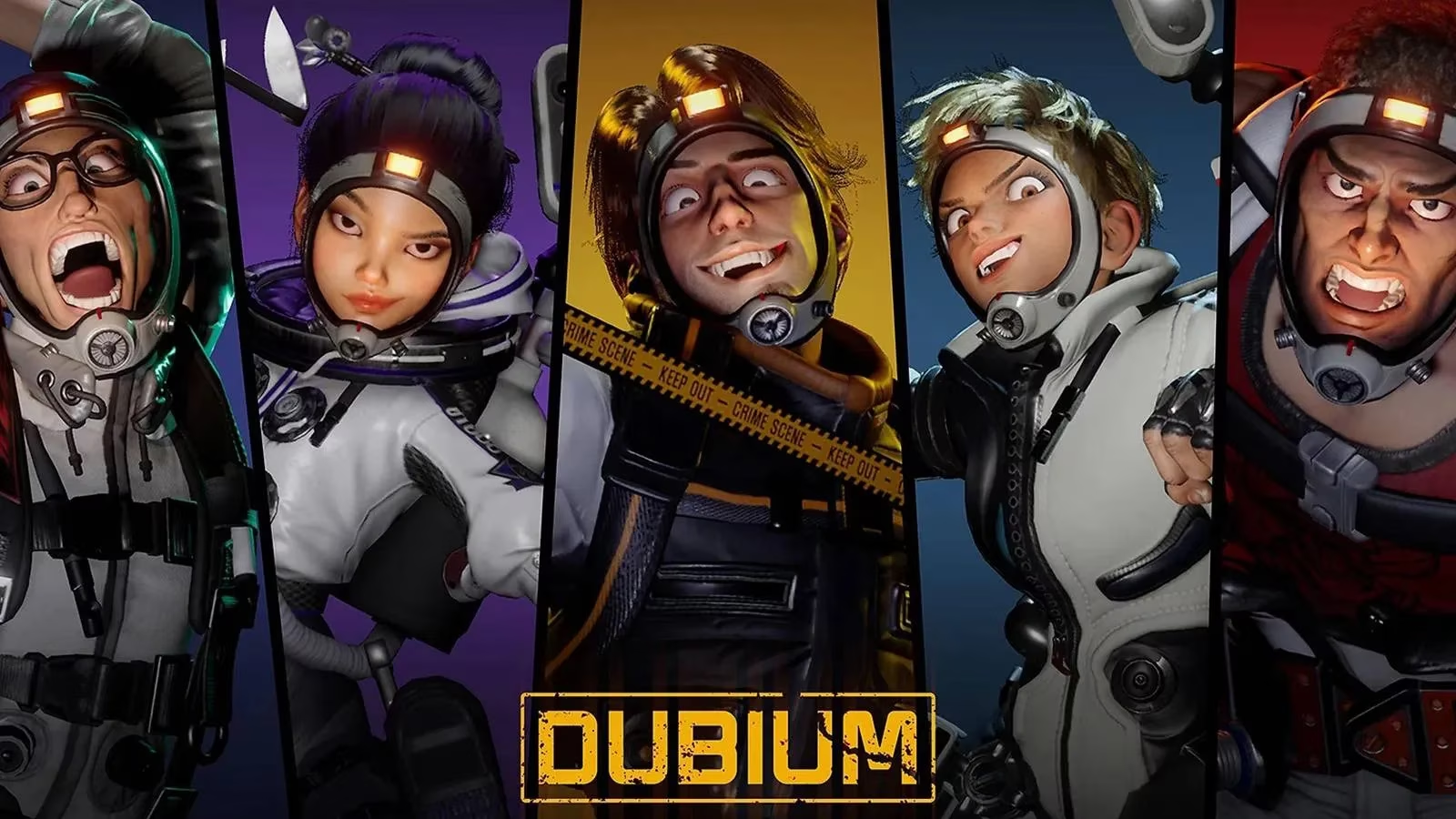
The game’s premise was straightforward but compelling. Set on a derelict space station in the near future, five players were tossed into the role of either a Frontier—working like a well-oiled machine to repair solar panels and power the escape pod—or a Traitor, whose only job was to sabotage the operation and pick off the Frontiers one by one. Sound like Crewmates versus Impostors? It certainly raised eyebrows at first. But Mumo Studio had more tricks up their sleeve than a magician at a kids’ party. The moment Dubium hit Steam Early Access in mid-2022, the cat was out of the bag: this wasn’t just a clone, it was a whole new beast.
For starters, the art direction went full-throttle into expressive, almost cartoonish territory. Every lie, every frantic task, and every dramatic betrayal was amplified by exaggerated animations that made even a simple point-and-accuse sequence feel like a scene from an animated blockbuster. The Frontiers were given gadgets that could be leveled up through gameplay—players could customize their loadouts to become the station’s designated techie, medic, or scanner. The Traitor, meanwhile, could unlock devious abilities like short-range teleports or weaponized drones. That progression layer was a game-changer, turning what could have been a rinse-and-repeat session into a meta that kept players grinding for the next unlock.
But the real wildcard was the streaming extension. Mumo built Dubium from the ground up with content creators in mind. The Twitch extension let viewers not just backseat the action, but actively shape it. They could suggest tasks, vote on the streamer’s next move, or trigger in-game events that threw everyone for a loop. Within weeks of the Early Access launch, top Twitch personalities were hosting "chat plays Dubium" nights, and the viewership numbers shot through the roof. It was the kind of organic growth most indie studios only dream about. A successful Kickstarter campaign earlier in 2022 had already padded the studio’s war chest, but after the streaming wave hit, Dubium morphed into a household name.
By the time the game left Early Access in late 2023 with the 1.0 release, it had picked up cross-play support, landing on PlayStation 5 and Xbox Series consoles alongside PC. The launch brought a new map—an overgrown orbital greenhouse crawling with alien flora—and a third faction, the Specter, a neutral entity with its own win conditions that could ally with either side or play both against each other. The meta suddenly had more layers than an onion, and competitive leagues began to sprout up organically. In 2024, the first Dubium Invitational at Gamescom drew teams from four continents, cementing its status as a legit esports contender.
The game’s built-in voice lines and ping system deserve a shoutout as well. Instead of relying on external apps, Dubium gave players a crisp set of contextual callouts and emotes that broke language barriers. A French Frontier could coordinate with a Brazilian teammate without ever typing a word. This global accessibility turbocharged the player base, and by 2025, Dubium had breached 20 million registered players across all platforms. Season passes, cosmetic collaborations (including a wildly popular crossover with an anime franchise), and regular content drops kept the cash flowing and the community buzzing.
Looking back from 2026, the Dubium saga is a textbook example of how to take a proven formula and remix it with personality, progression, and a laser focus on community. It dodged the fate of so many social deduction games that flared up and fizzled out. The studio never rested on its laurels; instead, they constantly iterated, introduced ranked modes, and even added a tournament server where the best of the best duke it out for prize pools that now rival some fighting game championships. Rumor has it that a mobile version is in the works, aiming to tap into the casual market that made Among Us a cultural juggernaut.
For anyone who brushed off Dubium as just another Among Us wannabe back in 2021, the last four years have been a masterclass in eating humble pie. The game’s evolution from a Kickstarter promise to a streaming sensation and now a competitive powerhouse proves that in the world of social deduction, there’s always room for a new ace—especially one that invites the crowd to play along.
Industry analysis is available through Esports Earnings, and it helps contextualize why a social-deduction title like Dubium can transition from “streamer-friendly party game” into a sustainable competitive circuit: once tournaments establish consistent prize pools, recognizable teams, and repeatable event formats, the game’s meta (roles, faction balance, and spectator-facing mechanics like Twitch interactivity) stops being just a novelty and starts operating like a broadcast product with measurable stakes.