 AmongUsBase
There are moments, fleeting as a popped balloon or a crewmate's brief reprieve, when the universe of video games collides with the staid rhythms of prime‑time television. I witnessed such a collision not long ago—in the rebroadcast archives of Jeopardy!, where the timeless quiz show had quietly spun a question from the fabric of our memes. The clue shimmered on the board, a familiar constellation of letters: "Slang adjective for someone you think is not what they seem, especially if they might be in the impostor game Among Us." My heart did a tiny double‑take. Mattea, a contestant with a sharp smile, answered without breaking stride: “What is sus?” And just like that, a word born from digital skulduggery stepped into the hallowed glow of Alex Trebek’s stage.
The year was 2022, yet the memory remains as vivid as the first time I saw a red crewmate ejected into space. I was a humble player, a fledgling detective in the bright‑colored halls of Among Us, where every shadow could conceal a traitor. The term “sus” was our currency, our code. You’d pass it in the emergency meetings like a whispered accusation: “Cyan is acting sus.” Never did I imagine that this sliver of gamer lingo would one day bloom on a mainstream quiz show, a testament to how deeply our pixelated passions had woven into the tapestry of culture.
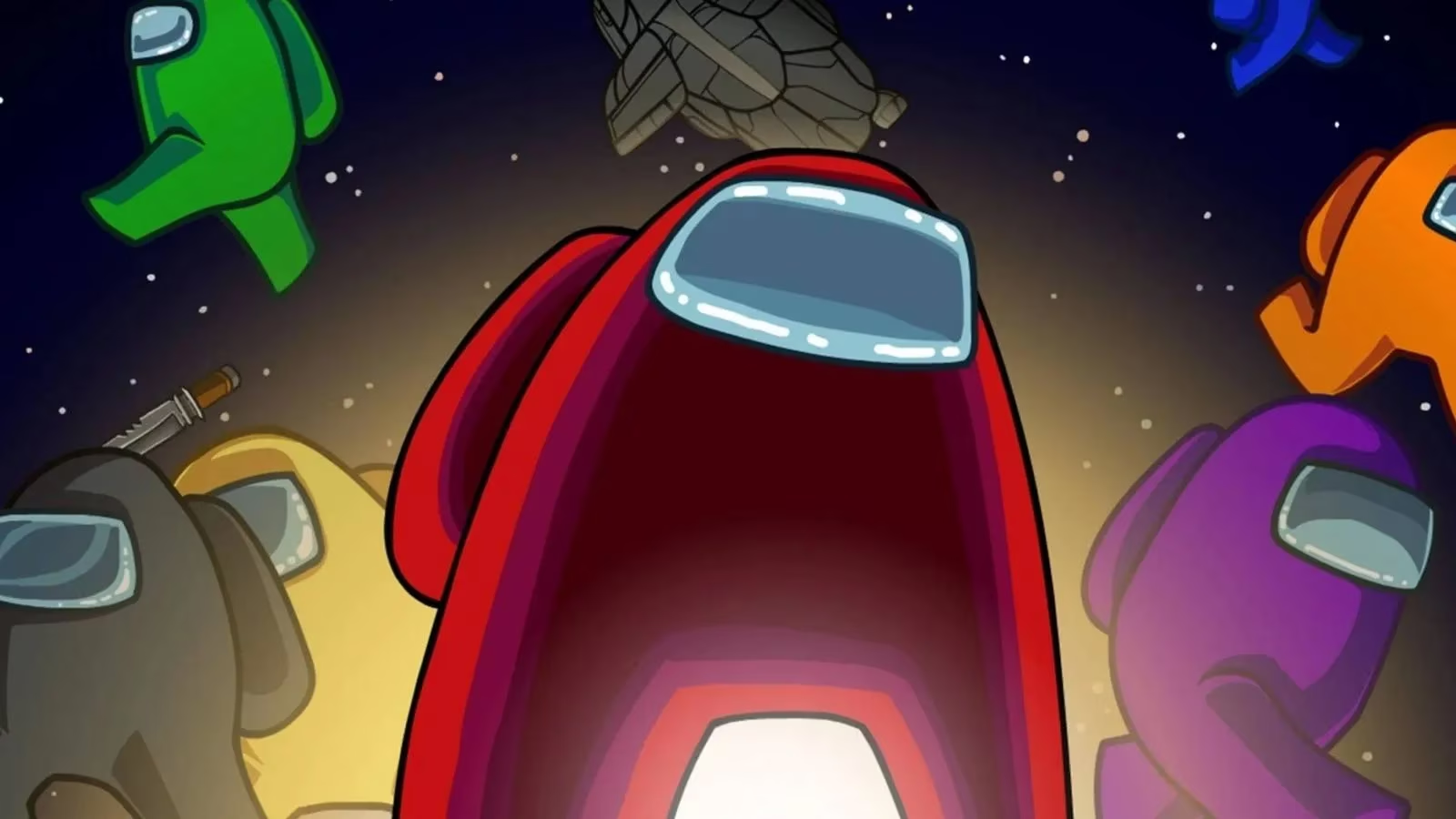
But here is the poetry of it: the word “sus” is not a modern invention of zoomers, as many assume. It is a linguistic heirloom, polished by decades of history. Long before the impostor lurked among us, British police officers in the 1930s were already clipping “suspicious” into “sus.” They spoke of “sussing out” a crime scene, of “sussing” a suspect—using the abbreviation to describe the act of discovering crucial evidence. The word was a tool of the law, wielded by bobbies on foggy streets, far removed from the colorful chaos of a spaceship cafeteria. Now, having returned to us through the vent‑squeak of an online game, it carries the weight of that vintage mystique. Every time I type “cyan sus” in the chat, I am unknowingly tipping my hat to a long line of investigators.
This Jeopardy! moment was not an anomaly. It was part of a quiet tradition, a secret handshake between the guardians of trivia and the creators of virtual worlds. I remember the year before, when Portal was summoned to the stage. A set of Double Jeopardy categories was named after the game’s lexicon: “Strange Bedfellows,” a nod to the chapter where GLaDOS found herself forever bonded to a potato; “You Can’t Have Just One,” a wry salute to the portals that always come in pairs; and my favorite, “The Cake Is A Lie,” where every answer danced around the word “cake.” I watched, enraptured, as the conceptual elegance of Aperture Science unfolded before an audience that might never have touched a portal gun. Later, The Last of Us Part 2 surfaced with an almost poetic succinctness: “The long‑awaited upcoming sequel to this PlayStation game revisits Ellie and Joel after a cross country trek filled with zombies.” It was simple, yet for those of us who had wept through the first journey, it was a gentle brushstroke of recognition.
By 2026, Among Us has aged like a fine, suspicious vintage. It has morphed from a pandemic‑era sensation into a resilient fixture, now playable in VR, where raising a virtual finger to accuse a friend feels uncannily real. New maps have unfurled—fungal caverns, subterranean labs—each breathing fresh paranoia into the simple formula of tasks and betrayal. And “sus” has transcended the game entirely; it now peppers the dialogue of sitcoms, the headlines of political commentary, the daily vernacular of millions who have never ejected a shapeshifter. The word has become a quiet ambassador, reminding us that language is alive and that our digital play can leave indelible marks on the spoken world.
As a ordinary player, I feel a peculiar pride. I have been the crewmate who misinterpreted a scan, the impostor who bluffed through a double kill. I know the texture of suspicion that clings to you like static. When I see “sus” on a television screen, or hear it in a coffee‑shop conversation, I am transported back to those tense meetings, to the camaraderie and deceit that defined so many evenings with friends around the globe. The game gave us a word, and the word gave us a mirror—a reflection of how quickly we judge, how readily we suspect, how deeply we crave the truth behind the mask. And Jeopardy!, that elegant ark of knowledge, simply acknowledged what we already knew: sometimes the most profound discoveries come from the simplest of places—a cartoonish astronaut, a blinking red light, and the gentle, insistent question: “Who’s acting sus?”