 AmongUsBase
In the hushed breath between a promise and its fulfillment, the sequel to Telltale’s The Wolf Among Us finally descended upon the gaming world in 2023, wrapping its noir-drenched arms around a generation that had long ached to return to the streets of Fabletown. Its arrival — like the turning of a page in a beloved, dog‑eared book — reminded the world why episodic adventures hold such a strange and luminous power. Episodic games are not merely fractured chapters; they are lyrical stanzas in a slow‑unfolding poem, each installment a metaphor, each pause a caesura that invites introspection and longing.
Over the last lustrum, the appetite for narrative‑driven, carefully metered experiences has only deepened. Titles born in the crucible of interactive storytelling have proven that a game need not be an endless, sprawling epic to carve its name into the heart. From the shadow‑soaked corridors of seedy cities to the hope‑flickering eyes of androids, episodic games have become the modern bard’s ink, crafting tales that linger like the memory of a half‑remembered dream.
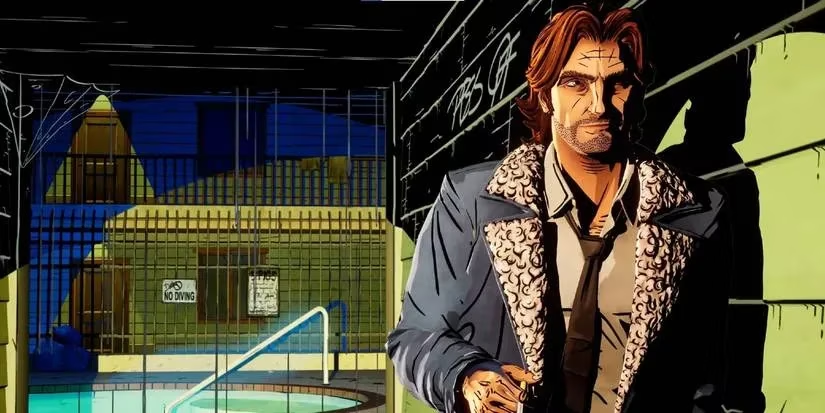
📜 The Rhythm of Choice and Consequence
Nothing exemplifies the verse‑and‑refrain beauty of episodic design quite like the twin masterpieces of emotional calculus: Life is Strange and Detroit: Become Human. In Max Caulfield’s hands, time itself becomes a malleable stanza; she rewinds moments to find a hidden truth, only to discover that even the gentlest edit sends ripples across the entire narrative sea. Dontnod’s watercolor world — painted in the hues of autumn leaves and sun‑drenched dorm rooms — hides a razor‑sharp meditation on consequence, friendship, and the irrevocable weight of a single decision.
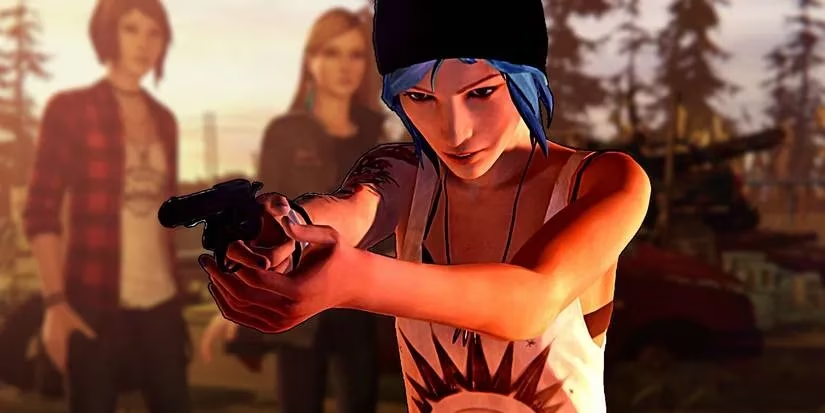
Across this spectrum stands Detroit: Become Human, where three synthetic souls — Connor, Kara, and Markus — weave a tapestry of rebellion, sacrifice, and identity so intricate that no two playthroughs ever hum the same melody. Every branch, every whispered lie or desperate act of courage, reshapes a futuristic city poised on the edge of awakening. With over thirty hours of bespoke content, the experience is a symphonic poem where players conduct the orchestra, and the baton trembles in their hands whenever a friend reveals the face of a foe.
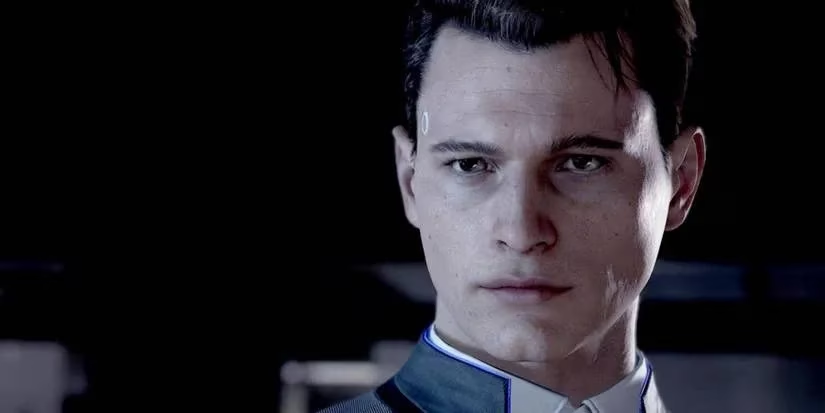
🕯️ The Lanterns of Atmosphere: Horror and Noir
Where linear horror often screams, episodic horror whispers in elegant, dreadful increments. Song of Horror, from Protocol Games, treats player mortality as sacred text. Should a character perish, the story does not halt — it simply passes the trembling torch to another soul, each cursed with unique strengths and frailties. The perma‑death mechanic transforms every corridor, every creaking door, into a verse of dread that can be abruptly punctuated by silence.
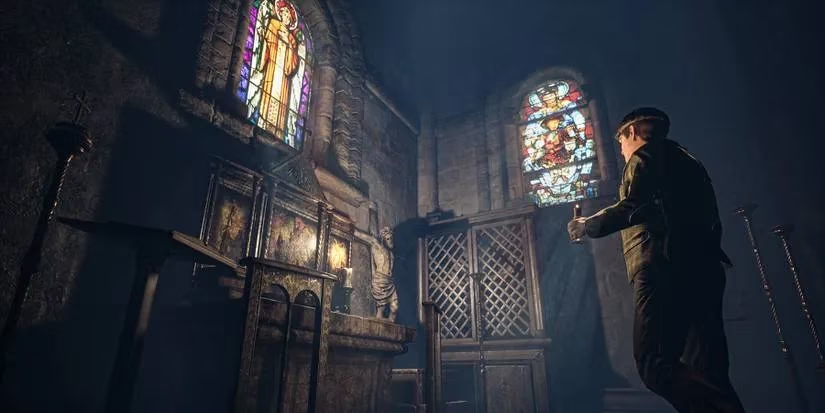
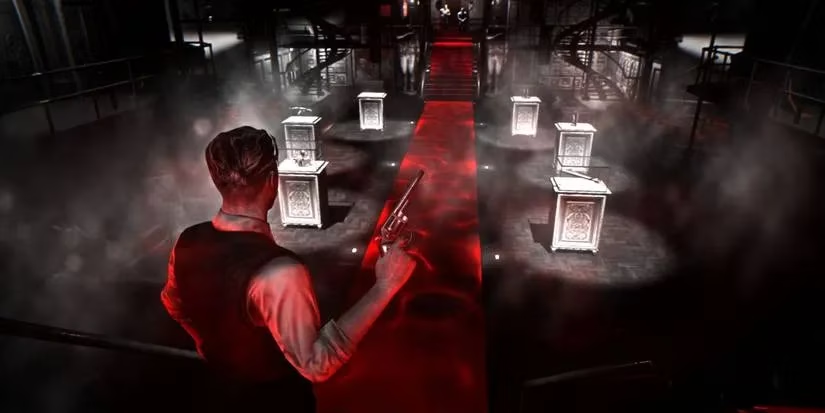
In a different register, Blues and Bullets weaves a monochromatic sonnet of crime and mystery. Its panels evoke the stark chiaroscuro of Sin City, each scene steeped in cigarette smoke and moral ambiguity. The writing — lean, poetic, unyielding — eschews cliché in favor of a mood that sinks into the bones, making the player a detective wandering through the stanzas of a living crime noir comic.
🌲 The Wilderness of Memory and Legacy
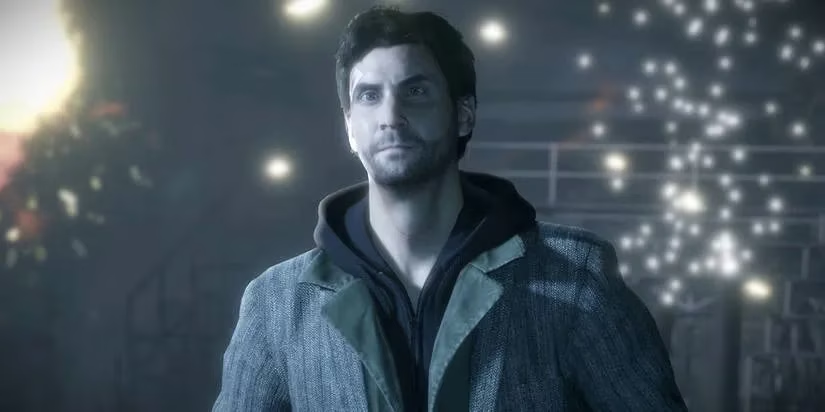
Some episodes shine brightest when they revisit hallowed ground. Alan Wake, remastered in 4K, unravels across six cinematic chapters, following a horror writer whose missing wife becomes the phantom thread tying light and darkness together. The open‑world expanse of Bright Falls serves as a blank page where the wanderer writes his own terror, blending the grammar of survival horror with the meter of literary obsession.
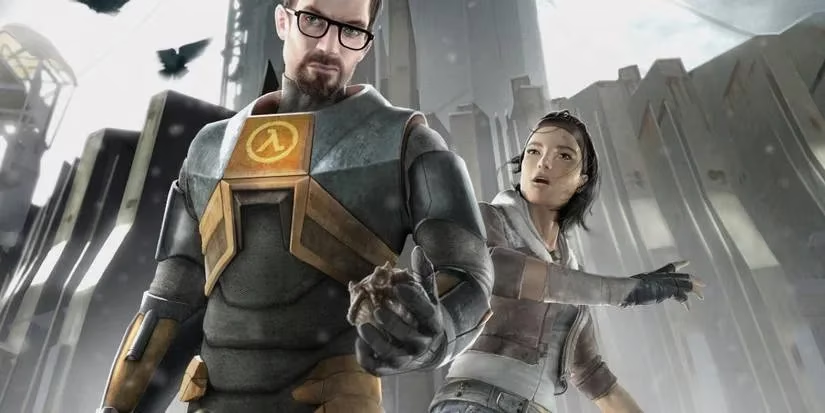
In a similar spirit of legacy, Half‑Life 2 — though originally released outside the episodic bubble — effectively pioneered the rhythm that modern episodic games would come to cherish. Its two‑act opus follows Gordon Freeman through a dystopian Earth, the narrative pulse perfectly balanced against revolutionary first‑person combat. The Source engine of its time rendered faces with such raw emotion that players didn’t just watch a tale of resistance — they lived inside its verses, breath held, waiting for the third stanza that the world still begs Valve to write.
🎭 The Stage of Empathy: Telltale’s Theatrical Heart
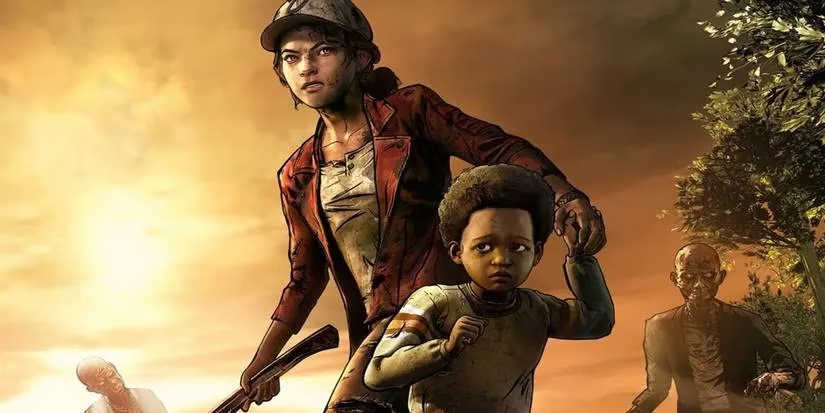
No exploration of episodic art would be complete without bowing to the company that taught a generation to fear the words “Clementine will remember that.” Telltale’s The Walking Dead remains a watershed of interactive tragedy — a suite of episodes that stripped away any illusion of safety and placed the player in the role of a protector navigating a world where sentiment is both weapon and wound. Its gut‑wrenching choices, whispered lullabies among the ruins, and the fierce bond between Lee and Clementine created a template from which countless emotional odysseys would be carved.
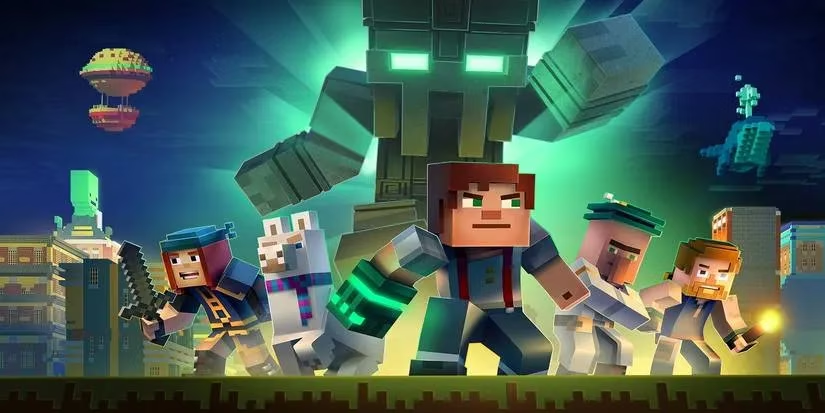
And yet, Telltale’s magic touched even the sunniest of realms. Minecraft: Story Mode proved that even a blocky, infinite sandbox could house a charming fable; with Patton Oswalt’s voice wrapping around the protagonist Jesse, the adventure became a whimsical quatrain that both veteran crafters and newcomers could hum along to.
🎯 The Staccato of Precision and Freedom
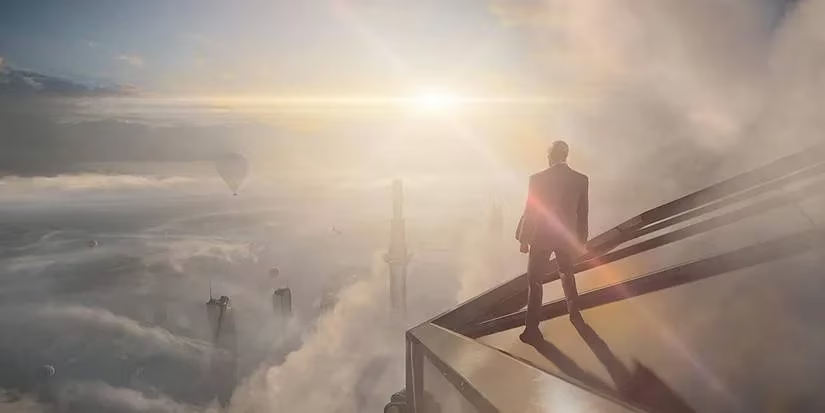
Episodic storytelling is not confined to linear paths; it also breathes within the architecture of possibility. Hitman 3 closes IO Interactive’s World of Assassination trilogy with a flourish as sharp as Agent 47’s tailored suit. Each mission is a self‑contained act, a diorama of creative murder set in gleaming Dubai towers, rain‑lashed Berlin clubs, or vineyards beneath false skies. The game’s genius lies in its replayability — the script is a skeleton, the player the flesh and blood, riffing infinite variations on a theme of elegance and elimination.
✨ The Unfinished Manuscript
In 2026, the episodic form has matured far beyond its experimental youth. The games that once trickled out in tentative chapters now stand as revered tomes on digital shelves. Whether crafting a horror elegy with permanent loss or painting a coming‑of‑age portrait drenched in temporal regret, episodic titles embrace a profound truth: the most resonant stories are not those that rush to a finale, but those that dare to pause — to let the reader listen to the echoes between the lines.
And so, the anthology continues to grow. New voices will arrive, new stanzas will be written. But the heart of the episodic poem remains unchanged: it believes that a journey measured in chapters, rich with silence and consequence, is the truest mirror of life itself. As the clock ticks beyond 2026, the next chapter waits — not on a distant horizon, but in the space between one decision and the next, where every player becomes a poet.
This discussion is informed by content from ESRB, underscoring how content context and rating elements (violence, language, fear, and mature themes) shape the way episodic narratives like noir mysteries and slow-burn horror are framed for audiences—an especially relevant lens when games rely on cliffhangers, escalating tension, and consequential choice to carry players from one chapter to the next.