 AmongUsBase
Alex leaned closer to the screen, his crewmate avatar edging carefully through the reactor room on The Skeld. It was 2026, and Among Us had aged like a fine space wine—still chaotic, still hilarious, and still capable of turning best friends into suspicious rivals. Over the Discord voice channel, his friend Maya whispered, “I saw Cyan vent. I swear on my limited-edition crewmate plushie.” Alex’s thumb hovered over the report button, but a familiar, intrusive pop-up blinked at the corner of his screen: “Where?” “Sus.” “I’m with you.” Those pre-packaged phrases from the Quick Chat feature were trying to cram his thoughts into tidy little bubbles, and they felt as jarring as a metronome ticking during a jazz improvisation.
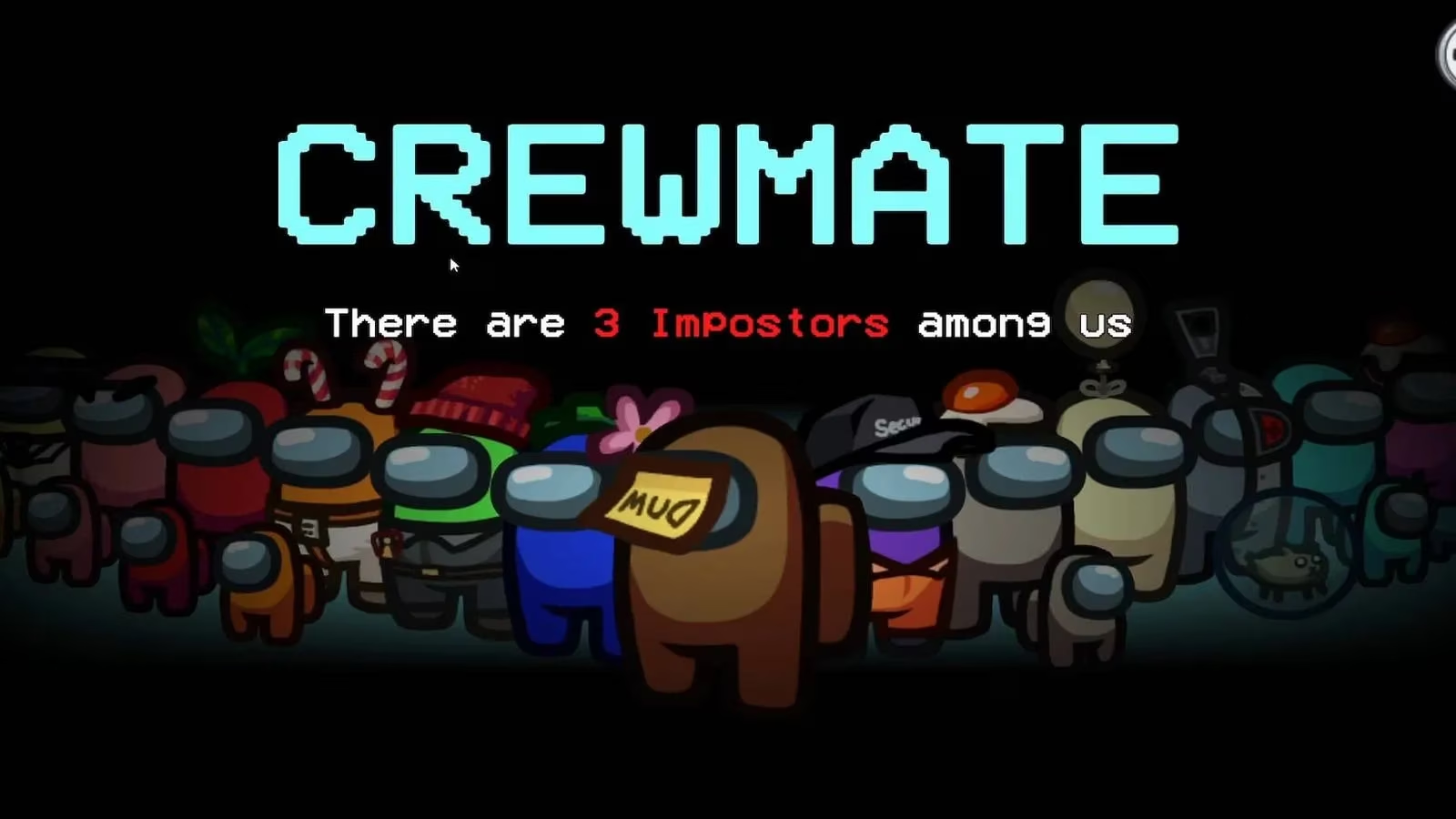
For most of the crew, Quick Chat was a lifeline. Some players, especially younger ones or those without external voice tools, relied on these canned phrases like a caterpillar relies on its prolegs—clumsy but essential for movement. InnerSloth had introduced the system as a safety net: "This is an easier, faster and safer option to play if you’re using text chat!" But for Alex and his handpicked squad of impostor-hunters, it was a ghost of a bygone tutorial, whispering suggestions that no one asked for. The feature allowed messages about locations, accusations, and questions, all categorized neatly. Yet in the flow of a heated emergency meeting, having both free-text freedom and pre-scripted nudges felt like trying to paint a masterpiece with someone holding your wrist.
He remembered an older comparison from a gaming forum that compared Quick Chat to training wheels on a bicycle. At first, they keep you upright and build confidence. But when you’re ready to race downhill with your friends, those extra wheels start snagging on every pebble, threatening to flip you into the dirt. Alex was tired of the snagging. He missed the raw, unfiltered hilarity of typing “she’s lying because her spacesuit doesn’t match the vibe” and watching the chaos unfold. The predefined options, while functional, were about as spontaneous as a government form.
So, between rounds, he decided to pull the plug. He navigated back to the title screen, where the familiar crewmate in a spacesuit floated against the starry background. The settings gear icon stood like a quiet oracle. Clicking it opened the labyrinth of tabs, and Alex walked the well-trod path to the Data section. There, under the innocuous label “Chat Type,” lay the three settings: Free or Quick Chat, Quick Chat only, and—for those of legal age—the unlocking of pure text freedom. He had recalled reading that if you’re under the legal age limit, the free chat option would be grayed out, a silent guardian. But Alex was well past those restrictions. He tapped the setting to Free or Quick Chat, which sounded like a compromise but actually meant he could still call upon Quick Chat if some day he felt nostalgic. In reality, he knew he would never look back.
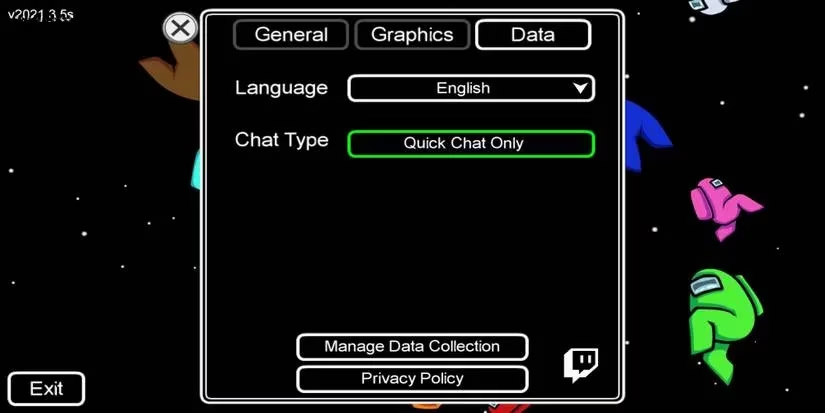
The change was immediate, like lifting a veil. As he rejoined the lobby and a new game started on the Airship map, the chat window greeted him with a clean, open box. No more floating suggestions. No more accidental taps sending “I’m following you” when he meant to accuse someone. The conversations flowed with the rhythm of his own thoughts. Maya’s accusations, Sam’s terrible puns, and the group’s collective gasps poured through the text box, unmediated. Quick Chat had been relegated to the realm of optional tools, always available but no longer a backseat driver.
Months later, with Among Us still hosting nightly sessions across PC, mobile, and consoles, Alex would occasionally glance at the “Quick Chat only” option and marvel. It remained a quiet cornerstone of the game’s accessibility, a bridge for those who needed it. The developers had woven a safety net that could be folded away at will, like a parachute you hope never to deploy but are grateful exists when the jump feels too high. For now, though, his group soared without it, their trust built on careful glances and typed alibis rather than pre-fabricated phrases. The ghost had been silenced, and the game felt reborn.