 AmongUsBase
I still remember the chill that ran down my spine when I first watched that trailer back in early 2022. The noir atmosphere, the rain-slicked streets of Fabletown, and the unmistakable growl of Bigby Wolf talking to an anger management therapist. As a longtime fan of the Fables universe, the wait for The Wolf Among Us 2 felt eternal after the first game wrapped up in 2014. Now, in 2026, I can finally look back on the entire sequel experience with the kind of fondness usually reserved for a well-thumbed comic book. The game not only lived up to my expectations—it deepened the mythos in ways I never saw coming.
When Telltale Games released that initial teaser, I was immediately intrigued by the shift in Bigby’s career. He had stepped down as sheriff and was now a private eye, working under the enigmatic new mayor—none other than Snow White herself, though she was referred to cryptically as “Ms. White.” The trailer hinted at a grittier, more personal story. The therapist scenes, with Bigby acknowledging his inner beast, felt like a deliberate move to make players question every decision they’d make. That psychological grounding hooked me before the first episode even dropped in 2023.
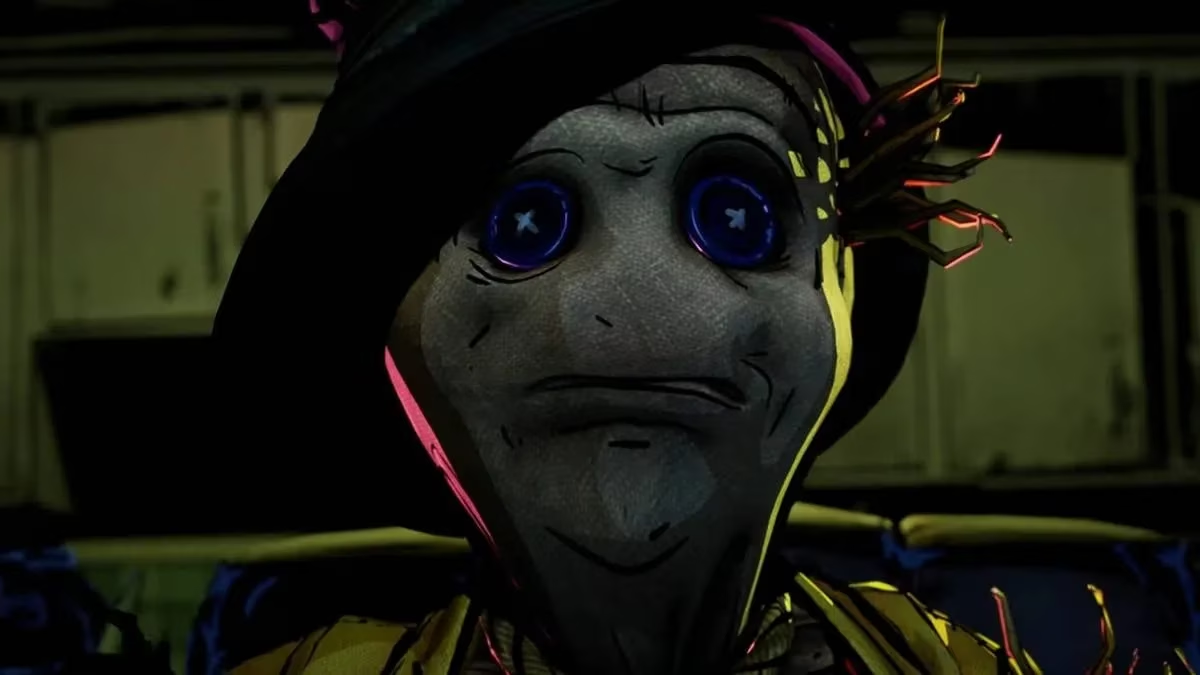
The introduction of darker renditions of The Wizard of Oz characters turned Fabletown on its head. I’ll never forget the first encounter with the Scarecrow, a lanky figure with button eyes and a voice like rustling leaves, or the Tin Man, whose hollow clanking spoke of a desperate need for a heart he could never truly have. These weren’t the whimsical figures from Dorothy’s journey; they were fables corrupted by the mundane world, much like Bloody Mary or the Woodsman in the original. The Scarecrow and Tin Man were just the beginning—later episodes pulled in other Oz denizens, each with a tragic backstory that tied elegantly into the broader conflict. I found myself digging through my old Fables trade paperbacks to spot the connections, a testament to how faithfully Telltale wove Bill Willingham’s lore into the interactive narrative.
One of my biggest comforts was the return of Adam Harrington and Erin Yvette as Bigby and Snow. Their vocal chemistry remained electric, bridging the decade-long gap between chapters. Snow’s role as Bigby’s boss added a delicious tension to their friendship; their dialogues became verbal chess matches where professional duty clashed with personal history. There’s a moment in Episode 3, during a stakeout on a rooftop overlooking the neon-lit skyline, where Snow admits how heavy the mayoral chain feels, and Bigby simply offers a cigarette. No words, just a quiet acknowledgment of their shared burdens. It’s those quiet character beats that made the sequel shine.
The switch to Unreal Engine didn’t strip away the cel-shaded comic aesthetic I loved. Instead, it enriched the shadows and gave every scene a cinematic depth. Raindrops clung to Bigby’s fur coat, neon signs flickered in puddles, and the character animation felt more fluid without losing the stylized angular features. I spent a ludicrous amount of time simply walking through the rebuilt Fabletown, admiring how the business office, the Trip Trap Bar, and the mundane alleys felt both familiar and fresh. The visual polish made the brutal fight sequences even more visceral—cracking bones and tearing fabric had a weight that the first game’s quick-time events could only suggest.
Gameplay-wise, the sequel expanded the investigation mechanics. As a private eye, I had to piece together evidence boards, tail suspects through crowded streets, and make moral choices that often blurred the line between justice and vengeance. The therapist’s sessions acted as a framing device, forcing me to relive my actions and see their consequences. Did I let the Tin Man walk free because he was a victim, or did I imprison him for the monster he had become? The game never judged, but the characters’ reactions and the unfolding of later scenarios made me revisit those decisions with a lump in my throat.
By the time the final episode rolled out in early 2024, I was fully invested in a tale that felt both intimate and epic. The resolution tied together threads from Bill Willingham’s meta-commentary on storytelling while delivering an emotional payoff that rivaled the original’s famous \u201cwolf among us\u201d line. The sequel didn’t just rehash old glories; it dared to ask whether a beast could truly change, and whether Fabletown could survive without a sheriff to keep its darkness at bay.
Revisiting The Wolf Among Us 2 in 2026 is like cracking open an old case file. The mysteries still grip me, and the characters’ dilemmas resonate even more now that I’ve lived with their outcomes. Telltale’s resurrection was a gamble, but this sequel repaid my decade of patience with a story that understood why I fell in love with Fabletown in the first place. If you haven’t walked these rainy streets yet, trust me: the wolf’s howl is still calling.