 AmongUsBase
As a fighting game enthusiast who's spent countless hours button-mashing and combo-chaining since my early days, I've always found that the stages are the unsung heroes of the genre. Sure, casual players might barely glance at the backdrop, and hardcore competitors often camp out in training modes, but for someone like me—caught in that sweet middle ground—these arenas shape the entire experience. They're not just backgrounds; they're silent storytellers, mood-setters, and sometimes, pure madness incarnate. Over the years, I've battled in places that made me pause mid-fight and wonder, 'What were the developers thinking?' From serene fields to flaming meteors, each stage has etched itself into my memory, reminding me that fighting games aren't just about the characters; they're about the worlds we destroy while duking it out. And honestly, isn't it wild how a simple change of scenery can turn a brawl into an epic saga?
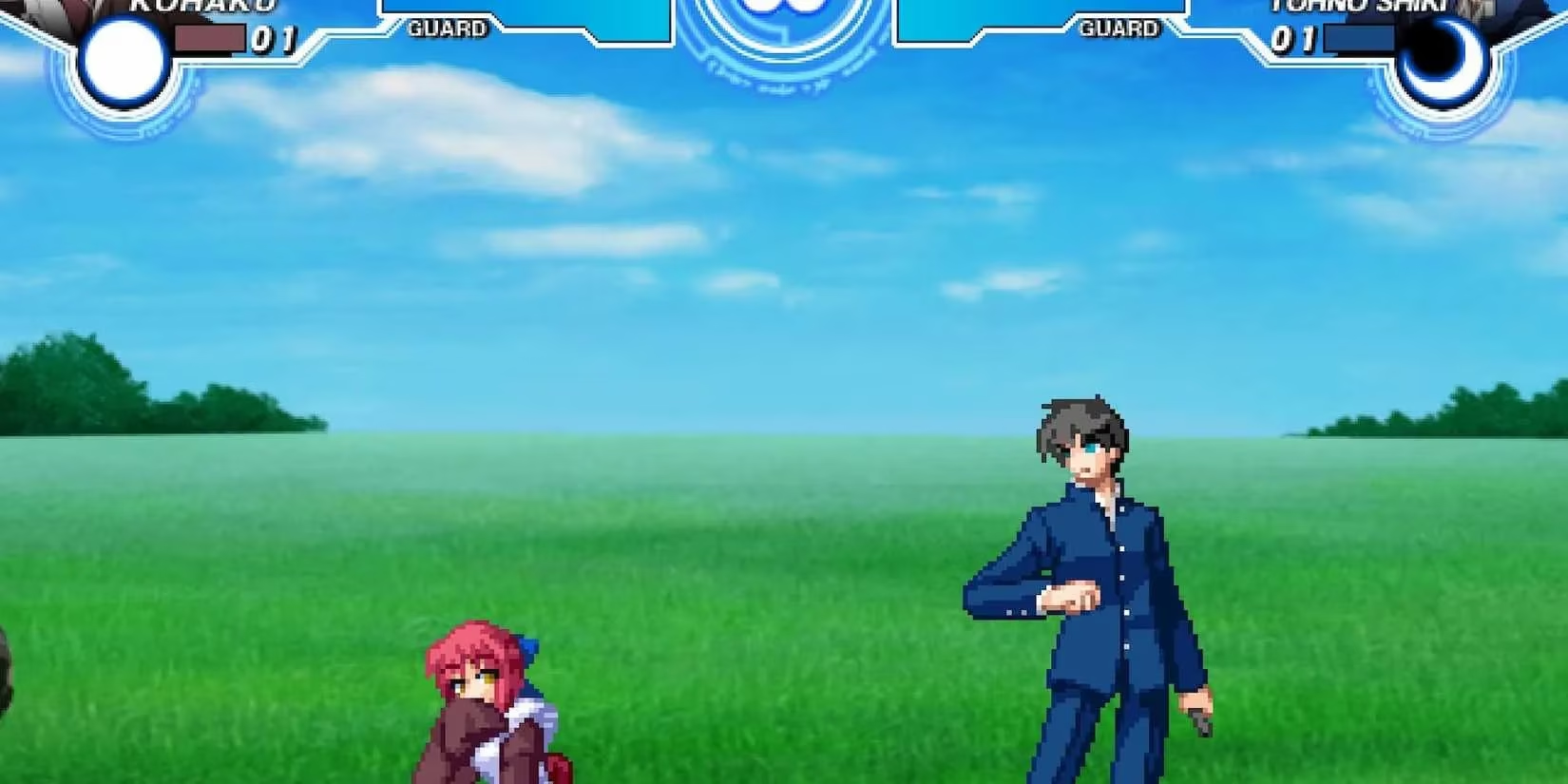
Starting off, there's the Field stage from Melty Blood: Type Lumina. I remember loading into this one during a late-night session—just a vast expanse of grass and flowers under a hazy sky, with a lone tree standing sentinel. It felt tranquil, almost too peaceful for a game where I'm hurling energy blasts. But then it hit me: this isn't just any field. In the Tsukihime story, this spot is where Shiki learns a brutal lesson about his powers. How bizarre to see it repurposed for flashy fights where characters like Arcueid are tearing each other apart. It’s a quiet stage, but the context makes it unsettling. Have you ever fought in a place that felt oddly personal?
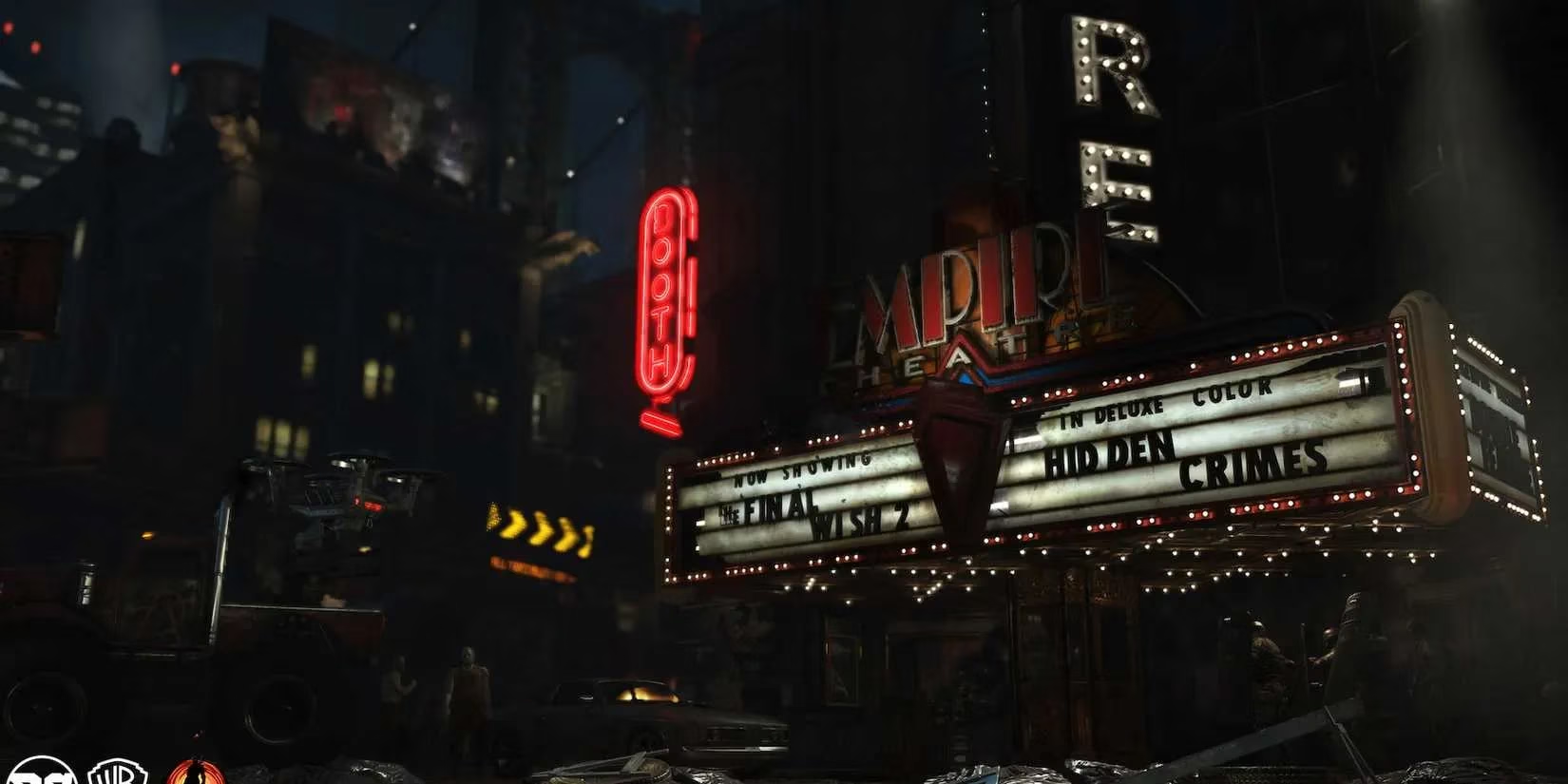
Next up, the Gotham City Empire Theater from Injustice: Gods Among Us. Ah, this stage—I've lost track of how many times I've tossed opponents into that neon sign for a cheap laugh. But what really sticks with me is that dumpster hazard. Tossing it feels so overpowered, like the game itself is winking at you, saying, 'Why not?' 🤯 Yet, the true weirdness came in story mode. Playing as Superman, I had to smash cars full of civilians to stop Black Adam. Talk about an out-of-character moment! It’s one of those stages that blurs the line between heroics and absurdity. Why do fighting games always make us do the most questionable things?
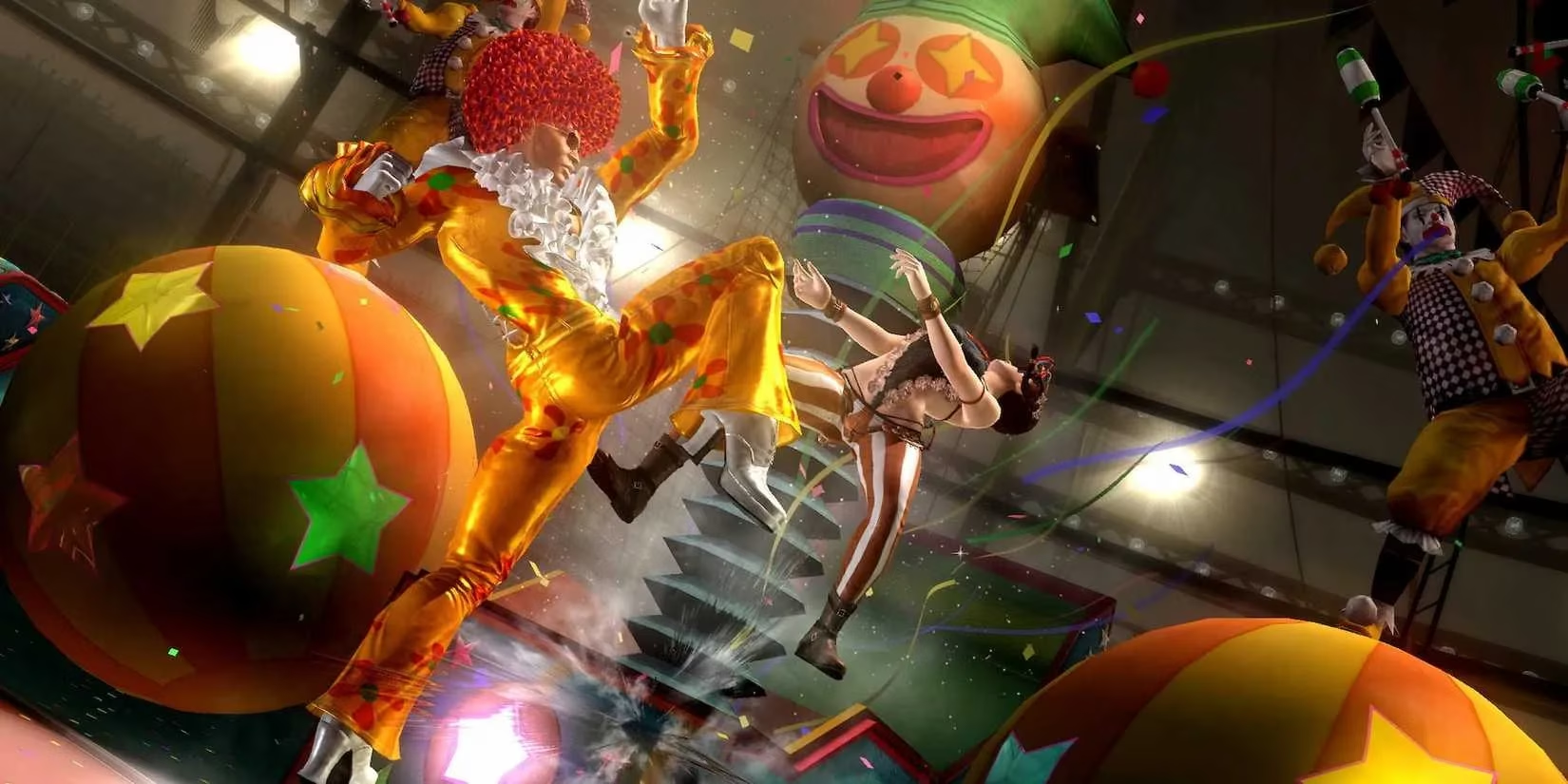
Then there's The Show from Dead or Alive 5. Dead or Alive often gets dismissed for its fanservice, but this circus stage proves there's more to it. I recall launching Hayate into that giant button, watching him get cannon-blasted across the ring. It’s pure, chaotic fun—clowns, acrobats, and all. Fighting here feels like a carnival ride, where every punch could send you flying into a ring of fire. Do you ever find stages like this make you forget you're even in a fighting game?
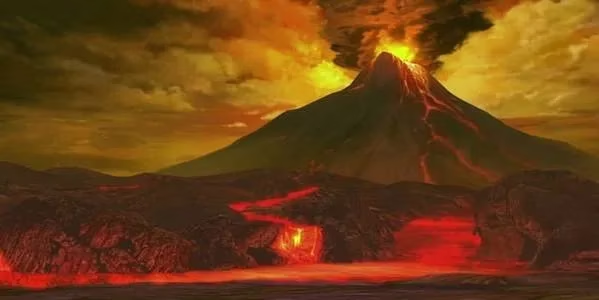
Moving to Street Fighter, Volcanic Rim in Street Fighter IV stands out. Street Fighter stages are usually grounded, but here I am, as Ryu, trading blows on a volcano's edge while lava bubbles below. It’s jarring to see ordinary fighters like Sakura in such a death trap. Somehow, this stage became iconic, even featuring in crossover games. What is it about fire and brimstone that amps up the drama?
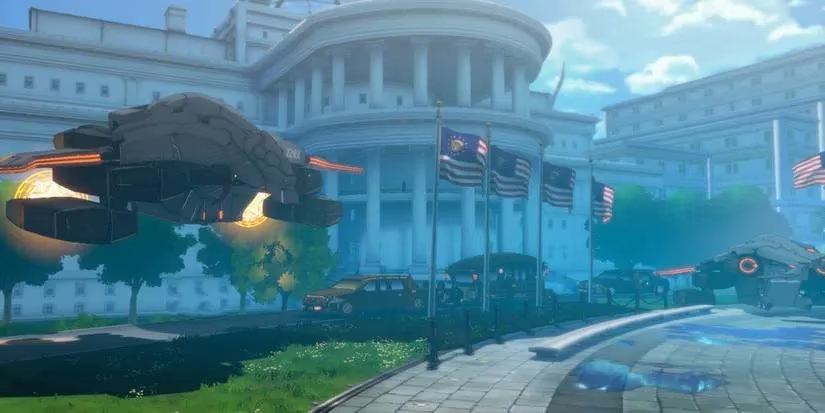
In Guilty Gear, the White House Reborn stage always cracks me up. Fighting in the Oval Office? As a character like Sol Badguy? It’s inherently ridiculous—punching through history while dodging chandeliers. The stage itself isn't over-the-top, but the setting screams 'only in fighting games.' And with the president popping up in story modes, it feels like a running gag. Who wouldn’t want to brawl in the most powerful house on Earth?
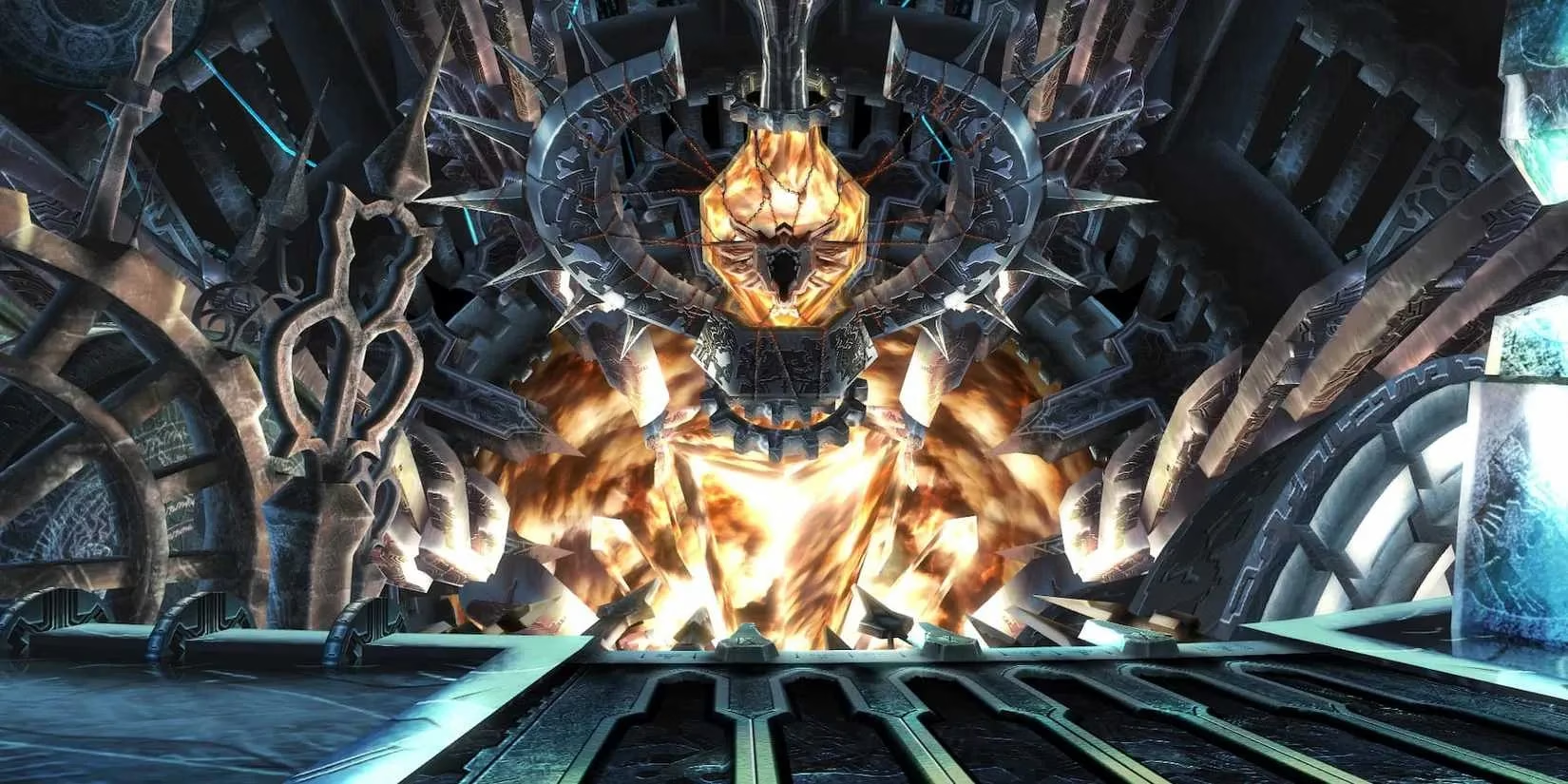
BlazBlue's The Gate is next, and wow, this one messes with your head. As Ragna, I fought here, trapped in a time loop where the stage shifts based on the story. It’s a kaleidoscope of fate, with five versions reflecting different character arcs. The whole thing feels like a puzzle—fighting while unraveling the plot. Stages like this make me question how much we overlook lore in the heat of battle.
Now, Fetus of God from Darkstalkers—just the name gives me chills. Fighting as Jedah in this fleshy, veiny arena with a giant uterus looming overhead? It’s pure horror, a testament to Capcom's arcade-era artistry. This stage sticks with you, like a nightmare you can't shake. How do developers even come up with something so visceral?

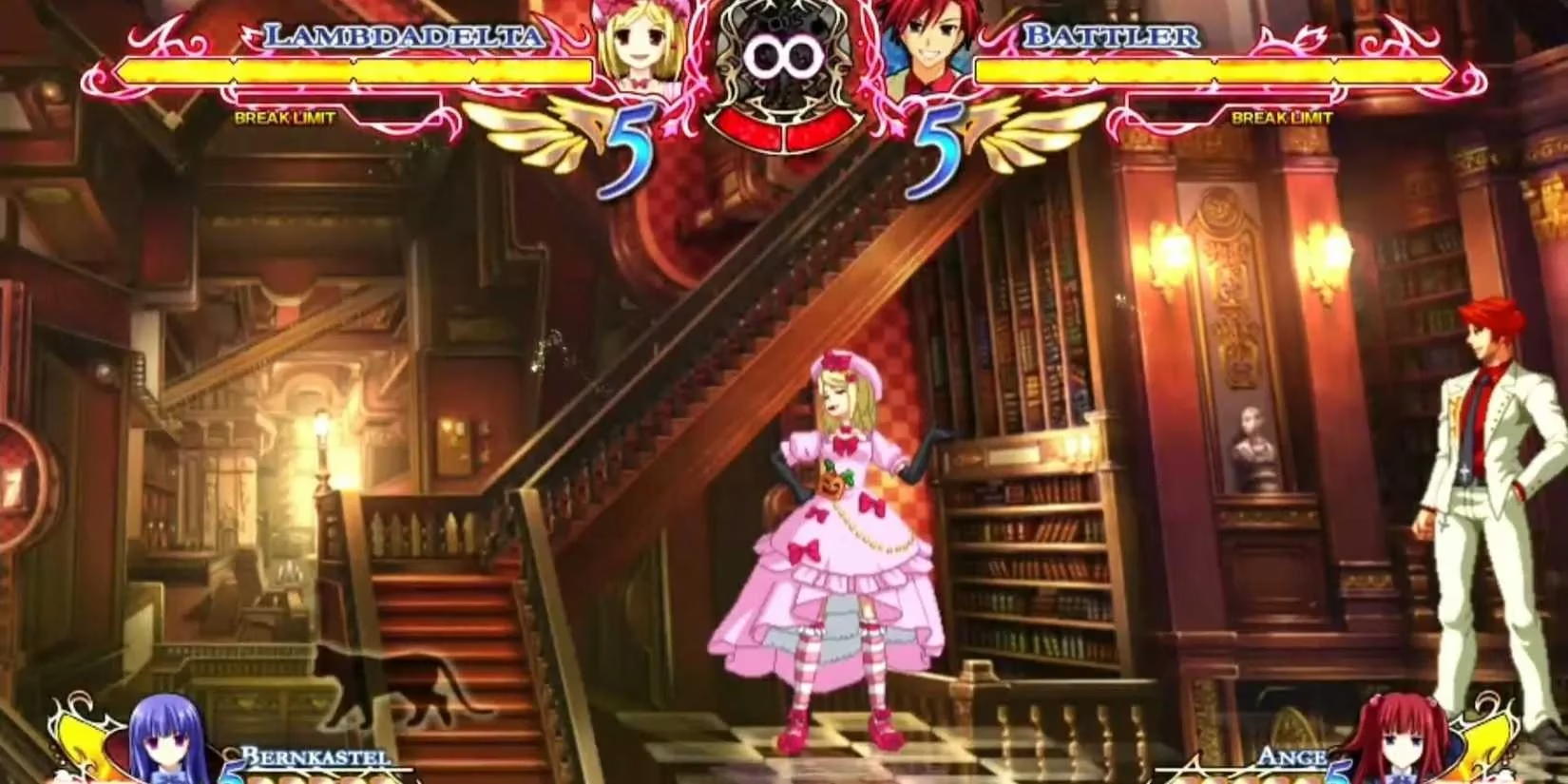
From Umineko: Golden Fantasia, the City of Books is surreal. Battling as Bernkastel among infinite books, each holding entire worlds, it’s a mind-bender. One minute it’s a mystery, the next it’s witch wars over reality itself. Stages like this blur fiction and fighting, making you ponder what’s real. Ever fought in a place that felt like it shouldn't exist?
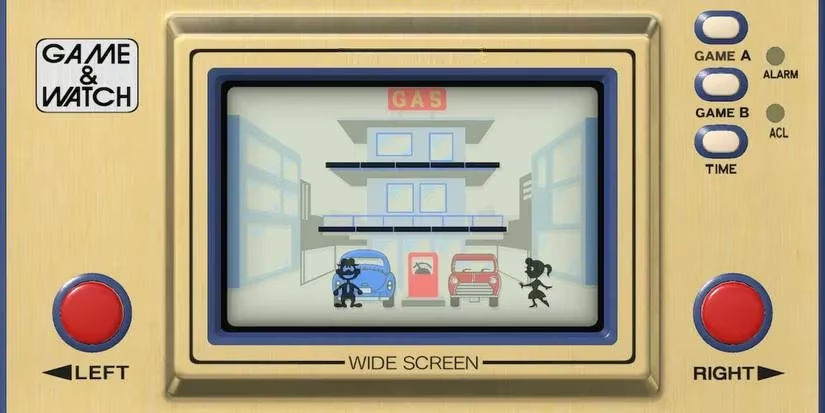
Then there's Flat Zone in Super Smash Bros, where everything flattens to 2D. As Mr. Game and Watch, it’s a nostalgic trip through old mini-games, but the visual trick is genius. Zooming in, seeing characters pancake out, it’s hilarious and audacious. Stages that play with dimensions remind me how creative this genre can be. 😄
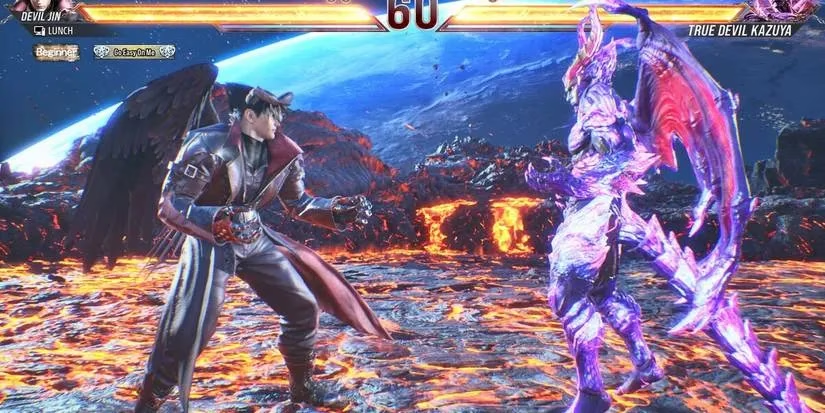
Finally, Into the Stratosphere from Tekken 8. This one blew my mind in 2025—starting on a space rock, plummeting to Earth as it burns and breaks apart. The transition scenes, where fighters briefly stabilize amid freefall, are cinematic gold. Fighting here feels like an apocalypse in motion. Why do we keep battling even as the world crumbles around us? It’s the pinnacle of ludicrous stages.
Reflecting on all this, these stages aren't just eye candy; they're the soul of the genre, pushing boundaries and sparking imagination. From books to blood, they show that fighting games thrive on the unexpected. And with new titles always evolving, who knows what insane arenas await? Maybe next time, we'll be brawling in a black hole or a dreamscape. After all, in the world of fighting games, the stage is never just a backdrop—it’s where the real magic happens.