 AmongUsBase
Hey everyone! Let me tell you something wild. It's 2026, and looking back at the past decade, one thing is crystal clear: Twitch didn't just change how we watch games—it completely rewrote the rules for indie developers. I still remember when discovering a cool new game meant scrolling through Steam's new releases. Now? It's all about catching your favorite streamer diving into something fresh and chaotic. The platform's power to make or break a game is insane, especially for the little guys. From hidden gems getting a second life to viral sensations born overnight, Twitch has become the ultimate indie game amplifier. It's not just about views; it's about creating communities, shared experiences, and those unforgettable 'you had to be there' moments that turn players into lifelong fans. Let's dive into the stories that prove it.
The Among Us Miracle: A 2020 Resurrection 🚀
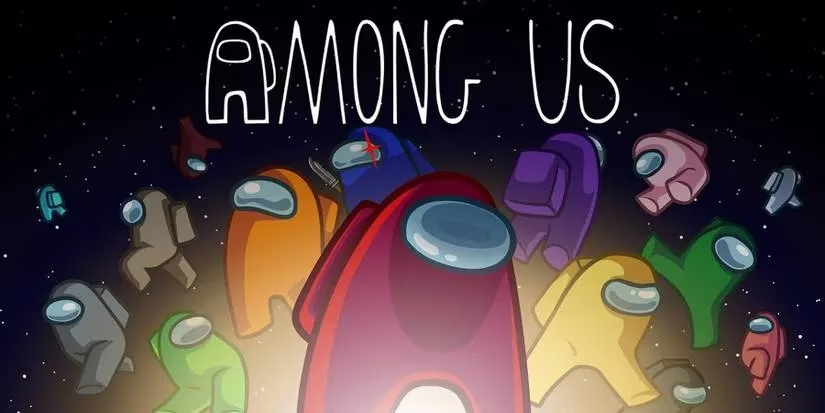
Okay, hands up if you thought Among Us was a brand new game in 2020? 🙋♂️ Yeah, me too. The craziest part? It actually launched in 2018 and was pretty much dead in the water. Then, the pandemic hit, and suddenly, streamers were looking for games to play with friends online. Cue the Twitch explosion! This social deduction game is the perfect example of a title that needed a platform like Twitch to succeed. Why? Because it's boring with just a few people! You need that full lobby of 8-10 players for the chaos and betrayal to really shine.
Streamers like Sodapoppin, xQc, and countless others became the matchmakers we never knew we needed. They gathered huge groups, screamed accusations over voice chat, and created pure comedy gold. Watching them play wasn't just entertainment; it was a tutorial. Viewers saw how the game should be played—with friends, laughter, and a healthy dose of paranoia. Twitch provided the critical mass of players and the social proof that turned a forgotten game into a global phenomenon. Without those streams, I genuinely believe Among Us would still be collecting digital dust.
The "Only Up" Phenomenon: Rage-Viewing at Its Finest 😤
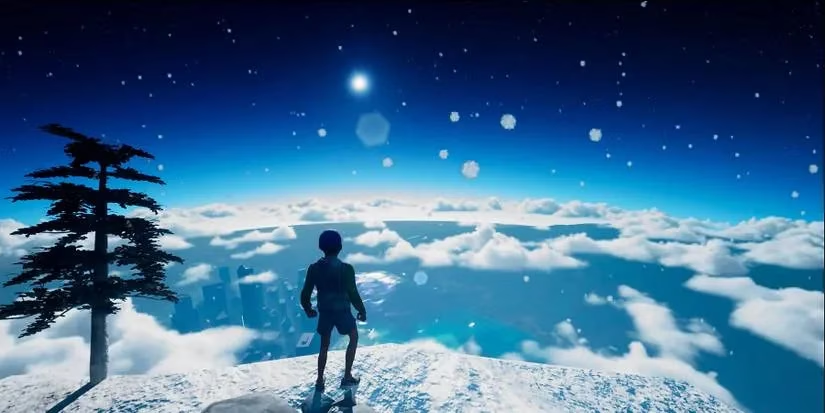
Remember the summer of 2023? My entire feed was just streamers falling. Over. And over. And over again. Only Up was a masterclass in viral game design. A 3D climbing game where you play as a kid escaping the favela by scaling a surreal, towering junkyard? Genius. The concept was simple, but the execution was brutally difficult. And that's exactly why Twitch loved it.
Let's be real: Most of us would rather watch someone else suffer through a rage game than play it ourselves. The appeal was twofold:
-
Schadenfreude: There's something deeply satisfying about seeing your favorite cool, collected streamer transform into a screaming, frustrated mess after falling from a great height.
-
The Collective Journey: Chat would collectively groan, cheer, and spam emotes with every near-miss and catastrophic fall. It felt like we were all on that climb together.
The game was tailor-made for content. Every attempt was a unique story of triumph or tragedy. While its removal from Steam eventually cooled the hype, for a few glorious months, Twitch was the absolute engine that propelled this indie title into the stratosphere. It proved that a game doesn't need a complex story or multiplayer—it just needs to be compelling to watch someone struggle with.
Phasmophobia: Turning Fear into a Party 👻
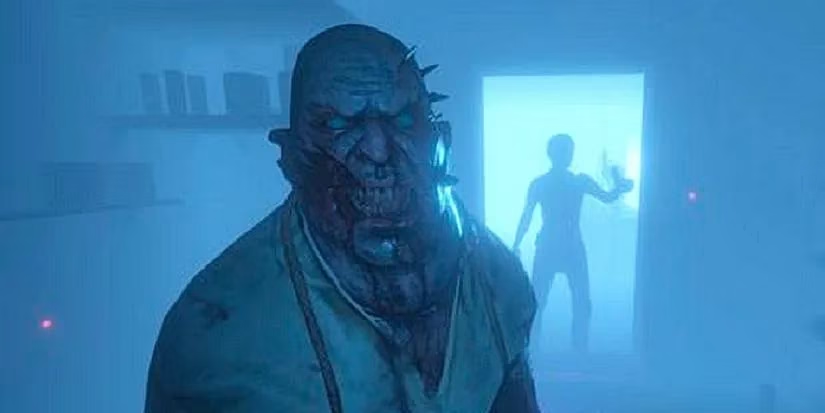
Indie horror games are a dime a dozen on Steam. So how did Phasmophobia, a game made by a single British developer, become a household name? Twitch turned fear into a social event. This wasn't just a game you played in the dark alone; it was a game you experienced with three friends, communicating, screaming, and laughing together. Streamers showcased this perfectly.
The formula was irresistible for viewers:
-
Team Dynamics: Watching a group of streamers slowly descend from confident ghost hunters into panicked messes.
-
The Unknown: Every ghost type behaved differently, making each investigation a fresh puzzle.
-
Reaction Gold: The jump scares were perfectly timed for maximum streamer (and viewer) reaction.
During the COVID lockdowns, Phasmophobia filled a void. It was a way to 'hang out' and share a thrilling experience with friends virtually. Twitch streams acted as the ultimate advertisement, demonstrating not just the game's mechanics, but the unique, shared social experience it offered. It went from an obscure Early Access title to topping Steam charts because viewers saw the fun and immediately wanted to replicate it with their own friends.
The Enduring Legacy of Five Nights at Freddy's 🐻
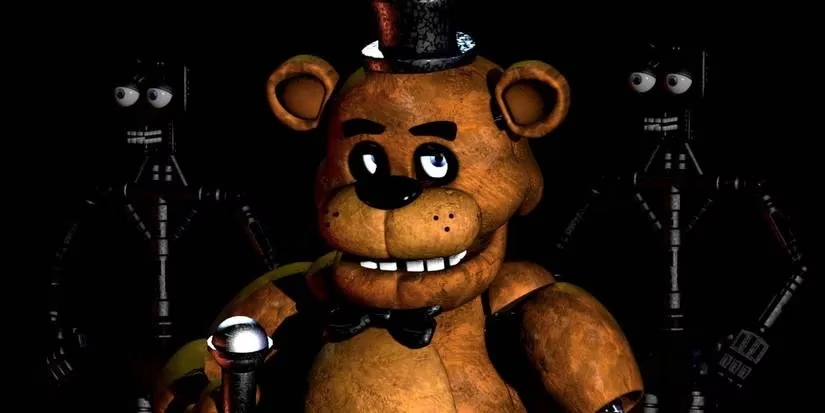
While FNAF's initial explosion happened on YouTube, Twitch has been the life support keeping the hype alive for over a decade now. Think about it: a series of games with relatively simple mechanics (watch cameras, close doors, don't get jumpscared) has spawned countless sequels, books, and even a movie. How? Creator-driven lore and community engagement.
Twitch streamers did more than just play the games; they dissected them. They:
-
Reacted to the Scares: The constant tension and sudden jumps are perfect, digestible content moments.
-
Built the Mythology: Streamers and their chats would spend hours piecing together the convoluted, hidden story of Freddy Fazbear's Pizza. This turned playing the game into a collective detective mission.
-
Created Challenges: From 20/20/20/20 mode to no-death runs, streamers invented new ways to engage with the games long after their initial release.
Twitch provided a platform for this deep, ongoing engagement. It wasn't a one-and-done playthrough; it was a continuous cycle of challenge runs, theory-crafting, and hype-building for each new release. The platform transformed FNAF from a flash-in-the-pan horror game into a sustained cultural franchise.
Hollow Knight: When Tough Gets Trending ⚔️
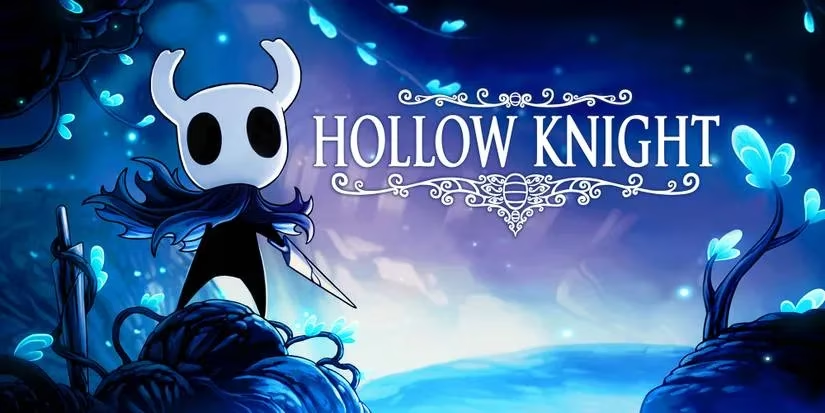
In a world saturated with Metroidvanias, Hollow Knight stands as a titan. A beautiful, hand-drawn, brutally difficult game about a bug exploring a fallen kingdom. Its success is a textbook case of "word-of-mouth" via streaming. This wasn't a game that relied on a massive marketing budget; it relied on the sheer awe it inspired in players and viewers.
Twitch showcased Hollow Knight's greatest strengths:
| What Viewers Saw | Why It Worked on Twitch |
|---|---|
| Stunning Art & World | The haunting beauty of Hallownest was immediately captivating in a stream preview. |
| Brutal, Fair Boss Fights | Watching a skilled streamer learn a boss pattern, die repeatedly, and finally triumph created incredible narrative tension. |
| Deep Exploration | The sense of mystery and discovery was contagious. Chats would go wild when a streamer found a new area or secret. |
Games with high skill ceilings are perfect for Twitch. Viewers get to experience the mastery and the struggle vicariously. They watch someone like a Soulsborne veteran tackle a tough boss, learn the strategies, and are then inspired to buy the game and try it themselves, thinking, "Maybe I can do that too." Twitch acted as the ultimate proving ground and advertisement for Hollow Knight's quality.
Fall Guys: The Takeover That Couldn't Be Ignored 🎭
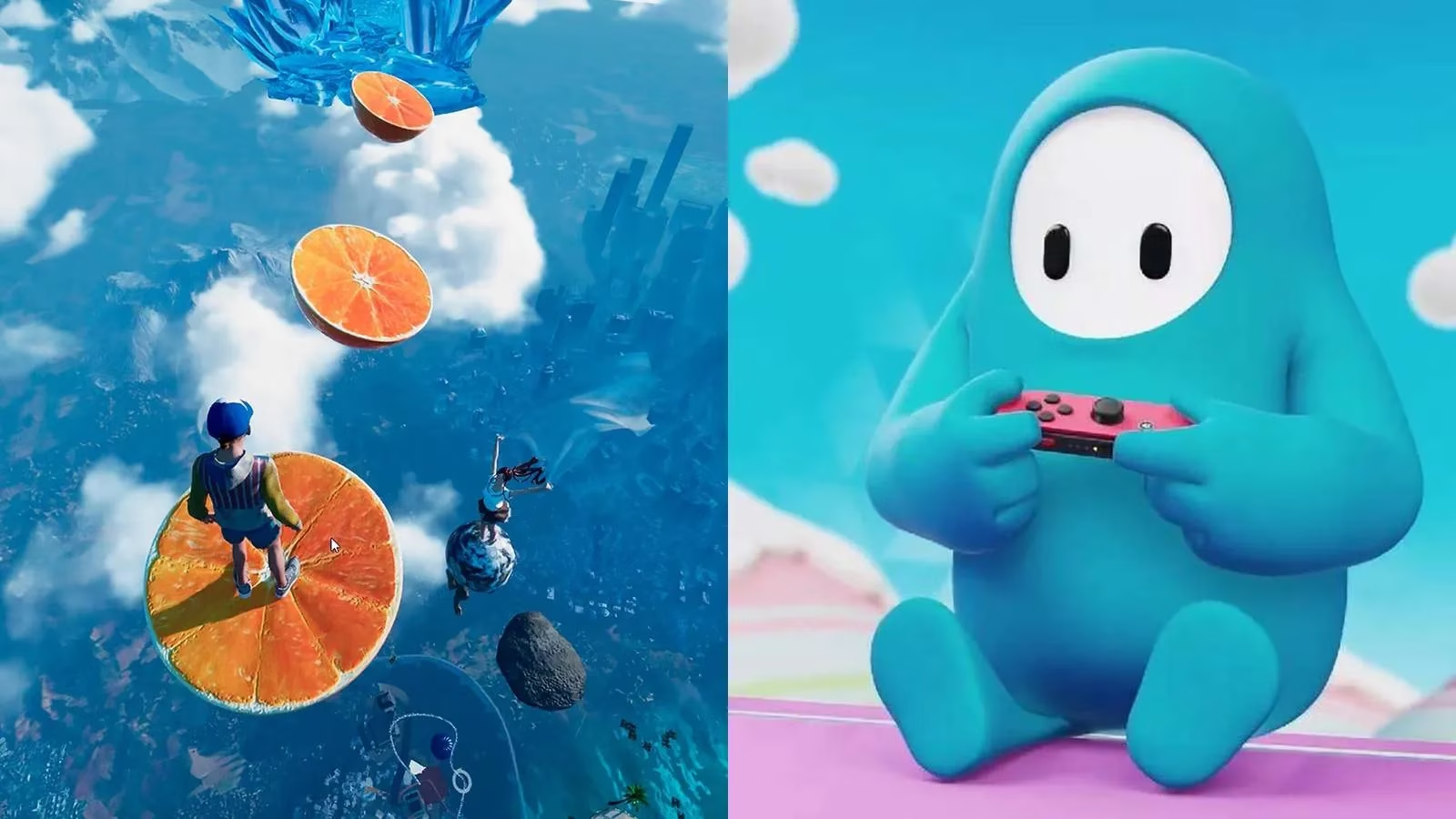
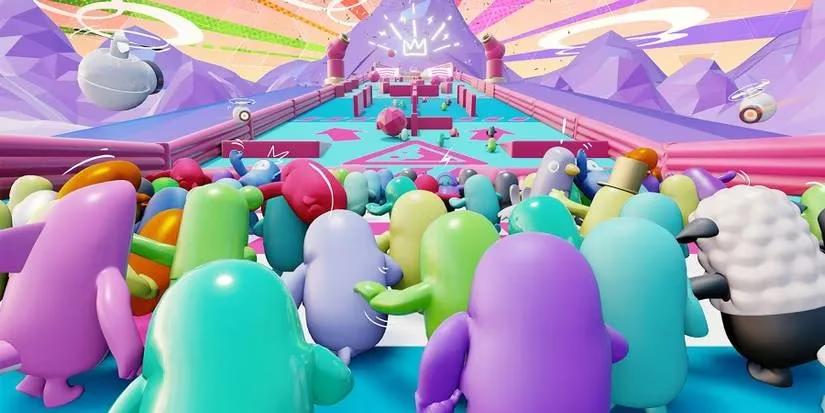
When Fall Guys launched, it didn't just join the battle royale genre—it threw a pastel-colored, wobbly party in the middle of it. And Twitch was the venue. The game's genius was its watchability. It's pure, unadulterated chaos that's easy to understand: run, jump, don't fall, and survive.
Twitch's role was multifaceted:
-
Accessibility: Anyone could understand what was happening within seconds of tuning into a stream.
-
Shared Humor: The physics-based fails, the desperate grabs at the crown, the last-second victories—it was all perfect, shareable content.
-
The "Free" Factor: Once it went free-to-play, the barrier to entry vanished. Seeing it on Twitch meant you could be playing it yourself five minutes later.
For a period, it felt like everyone was streaming Fall Guys. This created a feedback loop: more streamers played it → more viewers saw it → more players downloaded it → which encouraged even more streamers to play it. Twitch became the game's central nervous system, constantly renewing interest with every new season, skin, and stage. It showed that for a colorful, chaotic party game, there's no better marketing than letting people watch the party happen live.
Getting Over It: The Original Rage-Climber 🪣
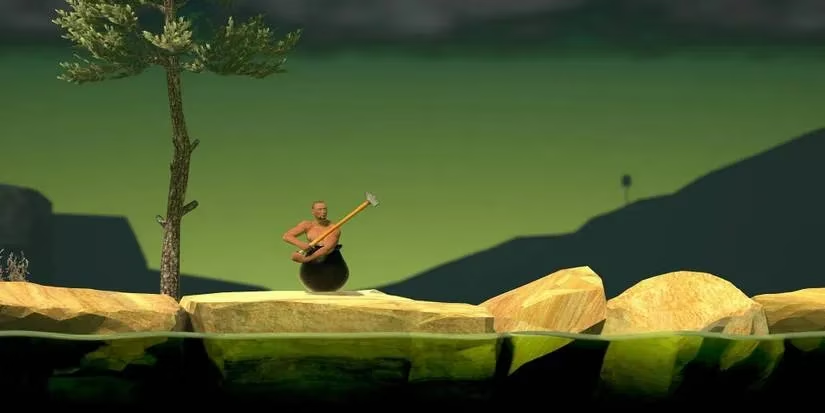
Before Only Up, there was the king of frustrating climbs: Getting Over It with Bennett Foddy. This game is literally about a man in a cauldron using a hammer to scale a mountain of junk. It's a masterpiece of minimalist, masochistic game design. And its popularity is almost entirely thanks to content creation.
This game is the purest form of "rage game." Progress is hard-won and easily lost with one wrong swing. Streamers playing it created a unique genre of content:
-
The Agonizing Climb: Hours of meticulous, tense progress.
-
The Catastrophic Fall: The single moment where it all goes wrong, sending the player tumbling back to the start.
-
The Philosophical Rant: Bennett Foddy's calming, narrated quotes contrasting with the streamer's utter despair.
Watching this wasn't just about the game; it was a test of human patience and resilience. Twitch amplified this by making failure a public, shared spectacle. Events like the "God Gamer Gauntlet" turned playing the game into a prestigious challenge. Viewers didn't just watch; they participated in the emotional rollercoaster, willing the streamer to succeed. It proved that on Twitch, struggle can be just as compelling—if not more so—than success.
So, what's the takeaway in 2026? Twitch is more than a platform; it's an ecosystem. For indie developers, it's the great equalizer. You don't need a multi-million dollar ad campaign. You need a game that creates a moment—a moment of shared laughter, collective tension, awe-inspiring skill, or hilarious failure. These seven games show that when a game taps into what makes live streaming special—community, reactivity, and shared experience—it can achieve things no traditional marketing ever could. The next big indie hit is probably out there right now, just waiting for the right streamer to hit 'Go Live'. And I, for one, can't wait to see what it is. What's been your favorite indie game you discovered through a stream? Let me know down below! 👇