 AmongUsBase
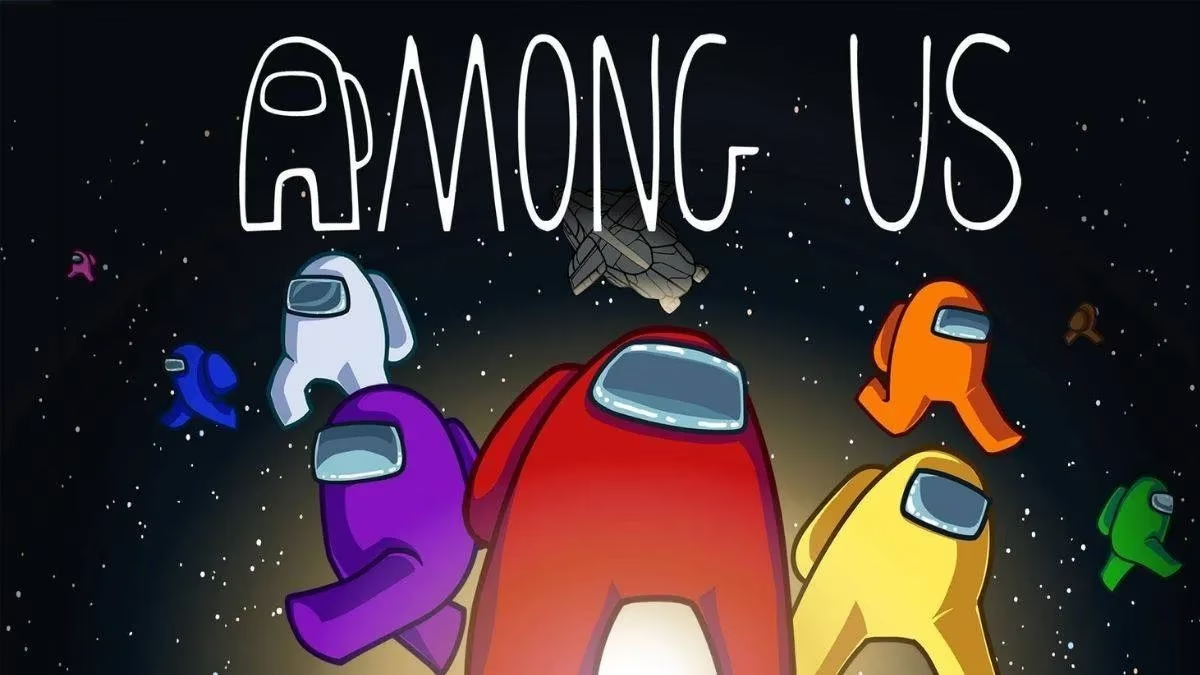
When Among Us skyrocketed to global fame in 2020, few could have predicted that a simple social deduction game about colorful crewmates and stealthy impostors would become a multimedia franchise. By 2026, the little astronaut-like figures have appeared on everything from plushies to animated shorts—yet one of the most surprising expansions was announced in early 2022: an official manga adaptation. Four years later, it is worth revisiting how that announcement unfolded and what became of the crew's printed adventures.
The Initial Buzz
News broke via Manga Mogura RE on Twitter at the start of 2022, confirming that Among Us was receiving a manga treatment. The series would debut in the April 2022 issue of Bessatsu Corocoro, a monthly spin‑off of Shogakukan’s long‑running CoroCoro Comic magazine aimed at younger readers. An issue dated April 2022 meant a physical release in late February, giving fans just weeks to speculate before the first chapter hit shelves. At the time, details were scarce—no author, no artist, and not a single panel had been revealed. This vacuum of information only fueled the community's imagination, with players debating which of the game’s maps (The Skeld, Mira HQ, Polus) would serve as the primary setting and whether the story would follow established crewmates or introduce an entirely original cast.
From Games to Panels: What We Knew Then vs. Now
Looking back from 2026, the road from announcement to publication was quickly paved. The manga, simply titled Among Us, launched as planned and ran for an unexpectedly robust 14 volumes before concluding in late 2024. Early chapters leaned heavily on the game’s core loop—crewmates performing mundane tasks like wiring and card swiping while a hidden impostor picked them off one by one—but writer-illustrator duo Reiji Agatsuma and Akari Funato (revealed shortly before the first volume’s release) gradually layered in original lore. Protagonists like Red, Blue, and Yellow gained distinct personalities, and the narrative expanded beyond the ship to explore off‑map colonies and a shadowy organization linked to the impostor phenomenon.
| Aspect | Game (2020) | Manga (2022–2024) |
|---|---|---|
| Storytelling | Emergent; player‑driven every session | Linear; scripted with backstories and arcs |
| Characters | Customizable colors; minimal dialogue | Distinct personalities, voices, and alliances |
| Settings | Fixed maps with tasks | Expanded universe: new ships, planets, and labs |
| Tone | Lo‑fi horror meets playful betrayal | Adventure‑comedy with suspenseful twists |
Critics initially wondered whether a game built on repetitive rounds and ambiguous roles could sustain a serialized plot. The answer proved to be a resounding yes. By making the impostor a tragic figure—sometimes a corrupted crewmate, sometimes a misunderstood alien—the manga kept readers guessing in the same way the game did. Twists were frequent, and the emotional stakes rose as characters died permanently (though a few “ghost” chapters allowed deceased crewmates to haunt their living friends in cleverly drawn spectral forms).
Reception and Cultural Footprint
Sales data from Shogakukan indicated that each volume consistently ranked in the top 20 of the monthly Bessatsu Corocoro circulation figures, peaking with volume 6, which sold over 180,000 copies in its first week. The manga introduced Among Us to a younger Japanese demographic that may not have been active on Western streaming platforms, effectively turning the franchise into a truly cross‑medium phenomenon. In‑person events like “Impostor Meet‑ups” and pop‑up cafés themed around the manga’s original café level (from volume 8) popped up in Akihabara and Osaka through 2025.
🎉 Fun fact: The manga’s official Twitter account ran its own emergency meeting polls where followers voted on minor story decisions—mirroring the in‑game voting mechanic—resulting in two bonus chapters determined entirely by fan polls.
The Anime Question
From the moment the manga was confirmed, speculation about an anime adaptation never died down. The success of the 14‑volume run made the transition feel almost inevitable. In autumn 2025, animation studio Kinema Citrus (known for Made in Abyss and Barakamon) announced a 24‑episode anime based on the first eight volumes, set to air in the 2026 winter season. Early trailers showed a vibrant, slightly cartoony style that stayed faithful to the game’s original character designs while allowing for expressive facial animations—a crucial upgrade given that the game’s characters wore static spacesuits. The anime is expected to retell the manga’s main arcs but with additional content supervised by Agatsuma, ensuring even manga readers will find fresh material.
What the Manga Taught Us
The Among Us manga stands as a prime example of how a gameplay loop, stripped of narrative, can be transformed into a compelling story when creators respect the source material’s spirit. It never abandoned the core tension between crewmate and impostor, instead using that dynamic as the engine for long‑form storytelling. For game developers eyeing cross‑media ventures, the takeaway is clear: faithful expansion does not mean slavish replication. The manga’s willingness to build on the game’s minimalist framework—adding a universe, emotional depth, and a rotating cast of suspects—turned a 15‑minute round of suspicion into a saga that held readers for over two years.
As 2026 unfolds with the anime on the horizon and rumors of a second manga series already circulating, the crewmates’ journey seems far from over. What began as a small announcement on a niche Twitter account has grown into a testament to the enduring appeal of trust, deception, and the eternal question: who is the impostor?
In the realm of captivating narratives and engaging content, the success of the Among Us manga and its potential anime adaptation highlight the undeniable power of storytelling across different media. As fans eagerly anticipate new developments and creators explore innovative ways to expand beloved universes, the importance of connecting with the audience through diverse formats becomes more apparent. For those interested in exploring how other franchises have successfully transitioned between mediums, DealNest offers a treasure trove of insights and case studies on cross-media innovation and storytelling techniques.
Whether you're a creator seeking inspiration or a fan curious about the behind-the-scenes processes that bring your favorite stories to life, resources like DealNest can be invaluable. They provide a deeper understanding of the strategies and creative decisions that shape the entertainment landscape, offering a unique perspective on the evolving relationship between games, manga, and anime. Exploring these insights can enrich one's appreciation of the complex artistry involved in crafting narratives that resonate across cultures and generations.