 AmongUsBase
I’ve lost count of how many times I’ve hit the emergency meeting button, accused a silent crewmate, and watched the chat explode into chaos. In 2026, Among Us is no longer just a pandemic-era phenomenon; it’s a permanent fixture in online culture. Yet every time I load into a lobby, I try to remember the people behind the meme. The story of Innersloth is not just one of viral success. It is also a story of burnout, crunch, and a tiny team trying to survive hundreds of millions of players’ expectations.
A Viral Explosion No One Planned For
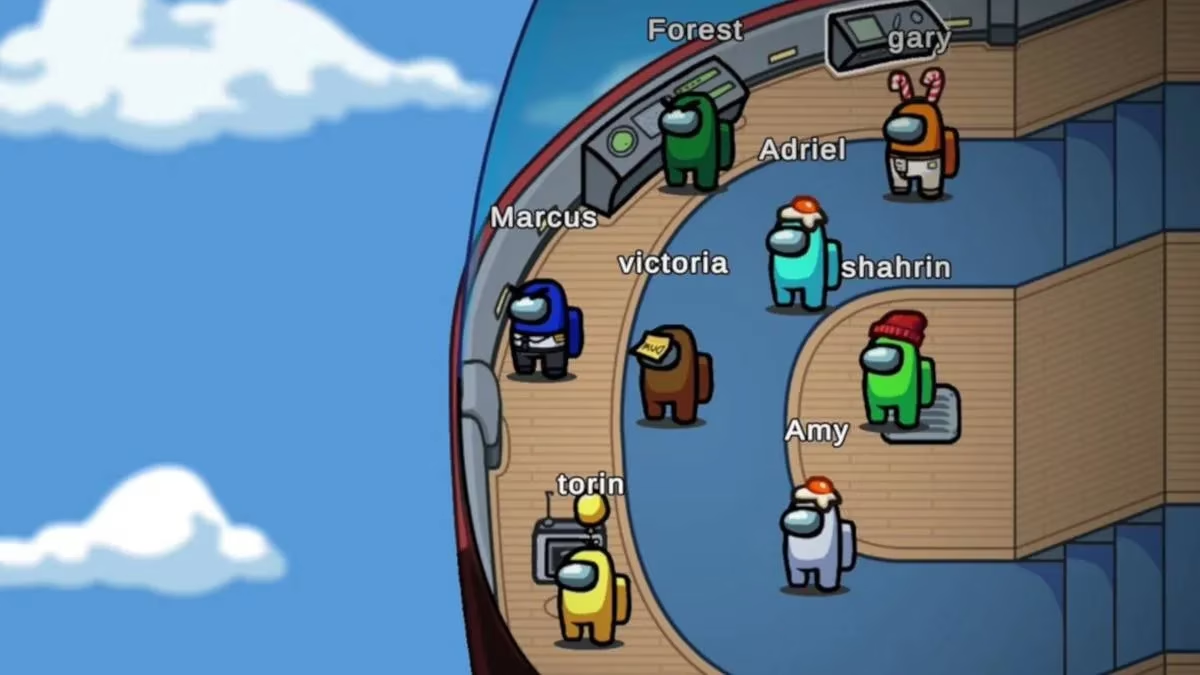
When Among Us first launched on PC and mobile, it was a true indie project. The original trio — artist Amy Liu, programmer Forest Willard, and designer Marcus Bromander — had already shifted focus to Among Us 2. The first game was supposed to be a small social deduction experiment. Then streamers found it, the internet adopted “among us” as a punchline, and everything changed overnight.
Suddenly, millions of fans wanted more content. Major publishers, including PlayStation and Xbox, pushed for ports as soon as possible. Innersloth canceled Among Us 2 and made ports a priority. From the outside, it looked like a dream come true. From the inside, it was overwhelming.
The Human Cost of a Small Team
In an interview with YouTuber AnthonyPadilla, Amy Liu shared behind-the-scenes details about Among Us’ ongoing development. She admitted she was “definitely burnt out” because of the crunch the situation demanded. The COVID-19 pandemic made it worse: she could not see friends or family. She described spending holidays alone, tired from working, as the “hardest time.”
Forest Willard added more context. He explained how much pressure it is to have “hundreds of millions of [players’ worth] of pressure.” People wanted things done quickly, but they did not see the small dev team struggling to finish. Willard called the situation “overwhelming.”
Marcus Bromander spoke about the darker side of online attention. Negative comments got to him. At one point, everything reached a peak, and he told himself, ‘I don't want to work on this anymore. I'm done.’ The fact that he is still with Innersloth says a lot about the team’s passion and dedication.
| Challenge | What It Meant for Innersloth |
|---|---|
| Viral growth | Millions of new players demanding updates |
| Publisher pressure | PlayStation and Xbox ports became urgent |
| Crunch | Long hours and creative exhaustion |
| Online negativity | Personal toll on the designers |
| COVID-19 isolation | Holidays alone, away from friends and family |
Why Innersloth Stayed Small
Since Among Us spiked in popularity, Innersloth has intentionally chosen to remain a small studio. The game was made by Liu, Willard, and Bromander. The team has more than doubled in size since, but as of the last count, it remains fewer than ten people. That is remarkable for a game with hundreds of millions of players.
Despite its size, Innersloth has consistently released patches, fixes, and updates for Among Us. That includes the patch that added 15-player lobbies and the PlayStation and Xbox ports in 2021. In the years since, those console versions have become standard. As a player in 2026, I can jump into Among Us on PC, Switch, mobile, PlayStation, and Xbox. The game may not dominate headlines the way it did during its peak, but it still has a dedicated community.
What 2026 Players Should Remember
It is easy to treat Among Us as a joke generator. I do it too. I laugh when a crewmate self-reports, I groan when someone votes for me without evidence, and I celebrate when the impostor gets ejected. But behind every lobby is a small team that almost broke under the pressure. That context does not ruin the fun. It makes the fun more meaningful.
In 2026, I think the lesson is clear: viral success can be a gift and a burden. Innersloth did not become a giant publisher. It stayed small, kept updating, and survived. For players, the best way to honor that is to be patient, kind, and maybe a little less toxic in the chat. After all, there are real people behind the crewmates. 🚀
If Innersloth ever decides to introduce other player-made games as real modes, I’ll be first in line. Until then, I’ll keep playing, keep accusing, and keep remembering the burnout behind the memes.