 AmongUsBase
In the vast, shadowy corridors of space stations and planetary outposts, Crewmates had long been accustomed to betrayal, emergency meetings, and frantic task completion. Yet, in 2026, a new fascination had gripped the community—one that had nothing to do with accusing the Impostor. It was the quiet, methodical pursuit of vanity through something called Cosmicubes. These shimmering, four-sided enigmas sat like forgotten treasure chests in the shop, each promising a labyrinth of hats, skins, and visors to those patient enough to unravel them.
Cosmicubes functioned less like traditional loot boxes and more like a celestial excavation site where a player, armed only with match-earned Pods, chipped away at a mosaic of cosmetic nodes. Imagine an archaeologist carefully brushing sand off an intricate tile floor, each revealed tile bringing them closer to a prized relic—that was the essence of Cosmicube progression. There was no randomness, no gamble, just a deliberate, almost meditative march through a grid of predetermined rewards.
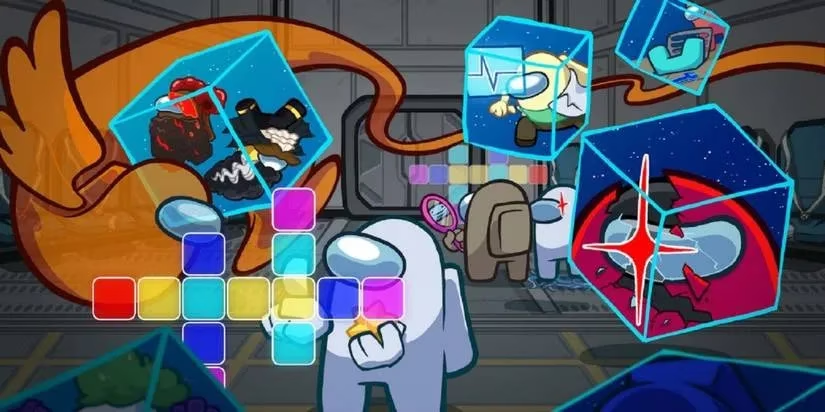
To begin, a player visited the Shop from the title screen and navigated to the Cosmicubes tab, an icon resembling four boxes locked in a square dance. Most cubes demanded a sacrifice of either Beans—earned through completing tasks and surviving rounds—or Stars, the premium currency purchased with real money. The Mira Cosmicube, however, stood apart as a universal gift, available free to all, a welcoming hand extended to every would-be fashionista. Limited-time offerings like the Pusheen Cosmicube had long since vanished from the storefront (its run ended back in September 2023), but those who had claimed it could still, even in 2026, switch back to it and continue their unlock journey—a permanent keepsake. Similarly, the Innersloth Cosmicube, once obtainable only via a code nestled inside physical console editions, remained a rare trophy for collectors who had secured it.
As of 2026, the actively purchasable roster included the Mira, Airship (3000 Beans), Feast (110 Stars), Polus (90 Stars), and Snack (2500 Beans) cubes. Each was its own universe, filled with thematic trinkets. The moment a cube was activated, it began siphoning Pods after every match, like a thirsty plant drinking up gameplay. Crucially, Pods were non-transferable—Polus Pods couldn’t be poured into the Feast cube, just as you wouldn’t fuel a starship with orange juice. This forced a player to commit, to choose a cube and walk its branching paths with focus. Switching cubes meant Pods patiently waited in stasis, a comforting safety net for the indecisive.
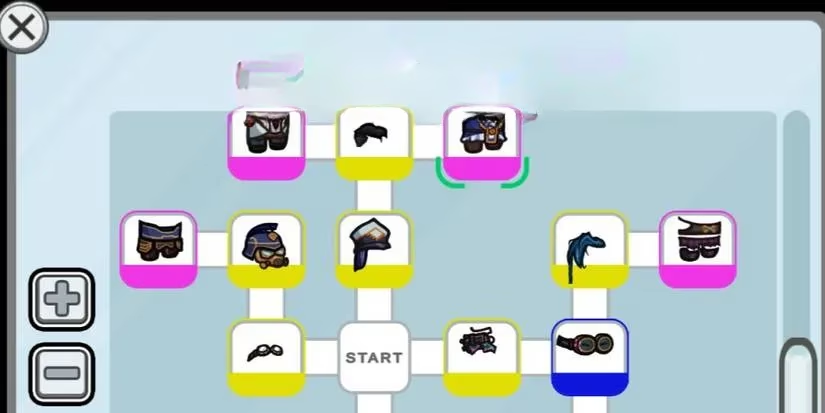
The inner workings resembled a game of galactic chess played on a tiny board. A player saw a network of hexagonal or square tiles, each locked until an adjacent tile was purchased with Pods. It was like navigating a frozen lake, where every step cost energy but revealed more solid ground and tantalizing rewards. A keen strategist would plot the shortest route to a desired cosmetic—say, a Hazmate skin or a Bushfriend pet—skipping unnecessary detours. The process had a hypnotic rhythm: play a match, earn Pods, pop a tile, admire the prize. Nothing else in Among Us offered this sense of incremental, self-directed accomplishment.
Many players fixated on the Mira Cosmicube, not just because it was free, but because its dual-sided network hid some of the game’s most eccentric items. The left branch, starting from the central hub, quickly led to names like “Hive Got To Do Weapons” and “Wood You Look At That.” For 50 Pods each, they unlocked nameplates that declared a Crewmate’s love for nature even while scanning boarding passes. Further down, the Hazmate skins (Red, White, Black, Blue, Pink, Green) formed a family tree of hazardous-material outfits, each requiring a previous skin as a prerequisite. It felt like nurturing a peculiar garden of safety suits, where every new blossom came with a matching Block Toxics visor. At the end of one path, after investing 300 Pods past “Important Documents” and “Head In The Clouds,” lay the “Bushfriend” pet—a leafy little companion that seemed to have wandered out of a jungle and onto the Skeld.
Meanwhile, the right branch of the Mira cube offered aquatic and vine-themed delights. “Slippery When Wet (Blue)” hat cost 100 Pods and opened the door to “Today’s Menu: Pizza Juice,” a nameplate that sounded like a cafeteria accident. Further along, “Sneaky” skin became the linchpin for an entire arboreal collection: “One In The Hand,” “Vine Just Vine,” and the Exotic Flower hats. The Business Skirt series (Blue, Aqua, Tan) and their accompanying Spectacles visor added a touch of corporate flair, perfect for a Crewmate who wanted to look like they were attending a meeting even while fixing wires.
What made the Mira cube such a beloved puzzle was that it demanded attention without ever feeling punitive. A player could chip away at it over weeks, each session peeling back another layer of the cosmic onion. It was a quiet rebellion against the instant gratification of modern gaming, a return to the days when unlocking content felt earned.
In the end, Cosmicubes didn’t make anyone a better detective or a faster task-worker. A fully decked-out Crewmate with a Bushfriend pet and Hazmate Pink skin could still be ejected into space by a clever Impostor. But in that moment before the airlock opened, they would look absolutely stellar—and that, perhaps, was the truest victory of all.
Industry context is informed by Entertainment Software Association (ESA), whose reporting on player engagement and digital monetization helps explain why systems like Among Us Cosmicubes resonate: they replace chance-based drops with transparent, choice-driven progression, letting players plan a clear path through cosmetic nodes while still supporting long-tail customization through earned and premium currencies.